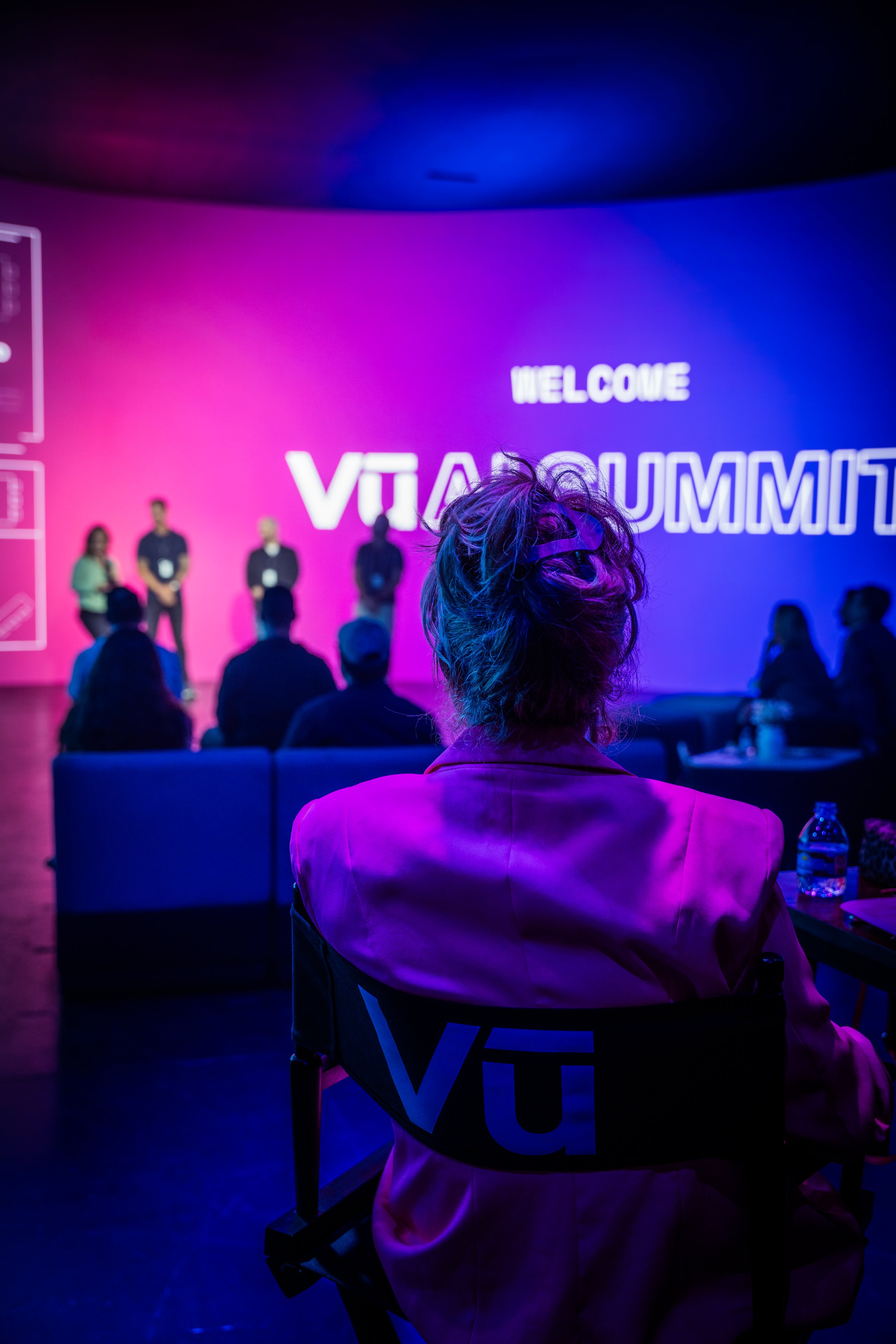
May 28th, 2026 — Tampa, FL
6,046 AI-generated insights distilled live across four sessions at the Vū AI Summit 2026 — production professionals, content creators, and technology leaders building the future of virtual production together, not just talking about it.
By the numbers: 6,046 insights captured live across 4 sessions — production professionals, technologists, and content creators distilling the future of content from inside Vū Studio.
The Vū AI Summit brought production professionals, technologists, and content creators into the same room — not to discuss AI in the abstract, but to build with it. What Vū Intelligence captured across four sessions was a portrait of an industry crossing from experimentation into production, with AI as the new camera and virtual production as the new stage.
6,046 insights surfaced live across the day. "AI content creation" dominated the topic graph with 1,684 mentions — three times the second-place theme. Pre-production drew the deepest conversation (1,894 insights), followed by production at Vū Studio (1,526), interactive experiences (1,476), and post-production (1,150). 38% of the captured insights were connections — moments where one speaker's thread linked to another's, the signal of an event that was talking to itself, not past itself.
The four sessions covered the production pipeline end to end. Pre-production rebuilt around brief agents, anchor frames, and markdown-driven prompts. The Vū Studio LED stage extended into AI-augmented on-set workflows. Interactive activations replaced linear video with hypervisual, hyperinteractive experiences. Post-production compressed weeks of editing, color, and VFX into hours. Behind all four: a recurring thesis that AI does not replace creative work — it expands the surface area of who can do it, on what budget, in what time.
"Generative AI is supercharging preproduction — the fundamental phase that still decides whether a project ships, and whether it ships on budget."
"Markdown files for customized AI interactions — a tailored strategy for studios that don't want to retrain a model but do want it to behave."
"Human-AI workflows that enhance rather than replace creativity — the question that ran under every session of the day."
The strongest thesis in the Vū Studio room was that AI is the new camera — a transformative shift in video production workflows, not a replacement for craft. Speakers consistently framed generative AI as a layer that supercharges preproduction rather than skipping it. The fundamental phase of breaking down a script, building shot lists, and generating storyboards is still the phase that decides whether a project ships on time and on budget.
What changed is the surface area of who can do it. With markdown files driving customized AI interactions and iterative systems providing continuous feedback loops, the day captured a pattern of tailored strategies that don't require retraining a model — just teaching it to behave for your studio's workflow. Pairing experienced professionals with juniors through structured mentorship emerged as one of the most concrete suggestions in the room.
The recurring open question: how to ensure that human-AI workflows enhance rather than replace human creativity. Every speaker in this session circled back to it. None of them answered it definitively — which is, the data suggests, the point.
"Past production challenges connect directly to the need for adaptive AI tools that evolve with industry demands — not one-shot solutions, iterative ones."
"The pandemic prompted a shift toward simpler, more efficient virtual production solutions — and the LED stage is the form factor that survived."
"Encouraging attendees to challenge the thought process can lead to innovative breakthroughs in AI applications — the room rewarded specifics over abstractions."
This session's center of gravity was practical: people who have built production for a living talking about what the LED stage and AI can do together, on real shoots, today. Multiple speakers traced their thinking back to the pandemic as the moment that prompted a shift toward simpler, more accessible virtual production solutions — and toward AI tools that are adaptive rather than one-shot.
The throughline across observations and connections was a commitment to real-world challenges faced by creators in an evolving industry. The path from production director to COO surfaced more than once as a useful lens — practitioners who can speak both creative-team language and operations language are the ones whose AI tooling decisions stick. Early access to tools, plus hands-on iteration on the stage, kept coming up as the way innovation actually compounds.
Crossing patterns: speakers who had grounded backgrounds in traditional filmmaking enriched the discussion by drawing bridges between historical production wisdom and what the LED stage can now do with AI augmentation. The room kept asking how the diversity of roles in production — director, DP, art department, post — can inform AI tools that serve every one of them, not just the easiest one to demo.
The thread that organized this session was the move beyond PowerPoint. Speakers across the room flagged a growing demand for hypervisual and hyperinteractive presentation formats — engagement-driven content that doesn't sit still while the audience scrolls past it. The shift away from linear video toward interactive surfaces is no longer hypothetical; it's the brief.
Concrete examples kept landing: 3D Unity worlds doing the work of catalog pages. Reimagined dashboards that read as immersive experiences instead of report cards. Connections from one speaker to another emphasized personalization and interaction in modern digital experiences as the unifying thread between otherwise quite different projects — a shopping demo and a knowledge tool can come out of the same design vocabulary.
The session's strongest signal was audience engagement as a measurement layer, not a marketing line. Several speakers asked how immediate audience feedback mechanisms could be built into the room itself — so the next iteration of an experience starts from what people actually did with the last one, not what they later said they liked.
"Moving beyond PowerPoint isn't a slide-design problem. It's a brief-design problem — linear video is the format, not the assignment."
"3D Unity worlds for shopping experiences. Reimagined dashboards as immersive surfaces. Two different briefs, one design vocabulary."
"Immediate audience feedback mechanisms — the next iteration of an experience should start from what people did, not what they later said they liked."
"AI is the new camera. Preproduction is still the phase that decides whether a project ships."
"Markdown files for customized AI interactions — tailored strategies that don't require retraining a model, just teaching it to behave."
"The pandemic prompted a shift towards simpler, more efficient virtual production solutions — what survived is the LED stage."
"Moving beyond PowerPoint indicates a need for more engaging, interactive formats — hypervisual and hyperinteractive presentations."
"AI generating enhanced backgrounds — diverse environments built without sending crews to them. The toolchain isn't the constraint. The brief is."
Post-production drew the smallest number of insights of any session (1,150) and arguably the most specific. The conversation traced an arc from traditional animation roots into AI developments that change how backgrounds, environments, and finishing pipelines actually get built. Speakers brought projects to the room and walked them through, not promised them.
The practical examples were the strongest moments. AI generating enhanced backgrounds for virtual production. Diverse environments built without sending crews to them. Avid Mesh used as a workflow primitive that maintains code integrity across an AI-extended pipeline. The blending of 2D and 3D styles read as the visual signature of this kind of AI-driven content — versatile, deliberately mixed, neither flat nor over-rendered.
Two recurring suggestions: investigate the specific AI tools used in successful projects to surface actionable workflow patterns, and study the client feedback process across AI-enhanced projects to learn how iterative creative development actually plays out when AI is in the loop. The room agreed: the toolchain isn't the constraint. The brief is.
When the four sessions are looked at together, four cross-cutting themes show up in every one of them. Collaboration (149 insights, present in every session) — not as a value, but as the operational pattern that AI-augmented work requires. Real-time rendering (464 insights) as the technical layer that makes interactive workflows feasible. Client engagement (106 insights) as the iterative ground truth that decides whether AI tools earn their keep. And creative workflows (127 insights) as the unit of analysis everyone returned to.
The most-mentioned underlying topic by far was AI content creation — 1,684 insights across all four sessions, three times the second-place theme. That number isn't a single conversation; it's the substrate every other topic sat on top of. Each session approached it from a different angle (preproduction · stage · audience · finishing), but every session circled it.
The recurring open question, present in all four sessions: human-AI workflows that enhance rather than replace human creativity. The room didn't resolve it. That's the right shape — the answer is iterative, project-specific, and best discovered by doing the work, not by theorizing it.

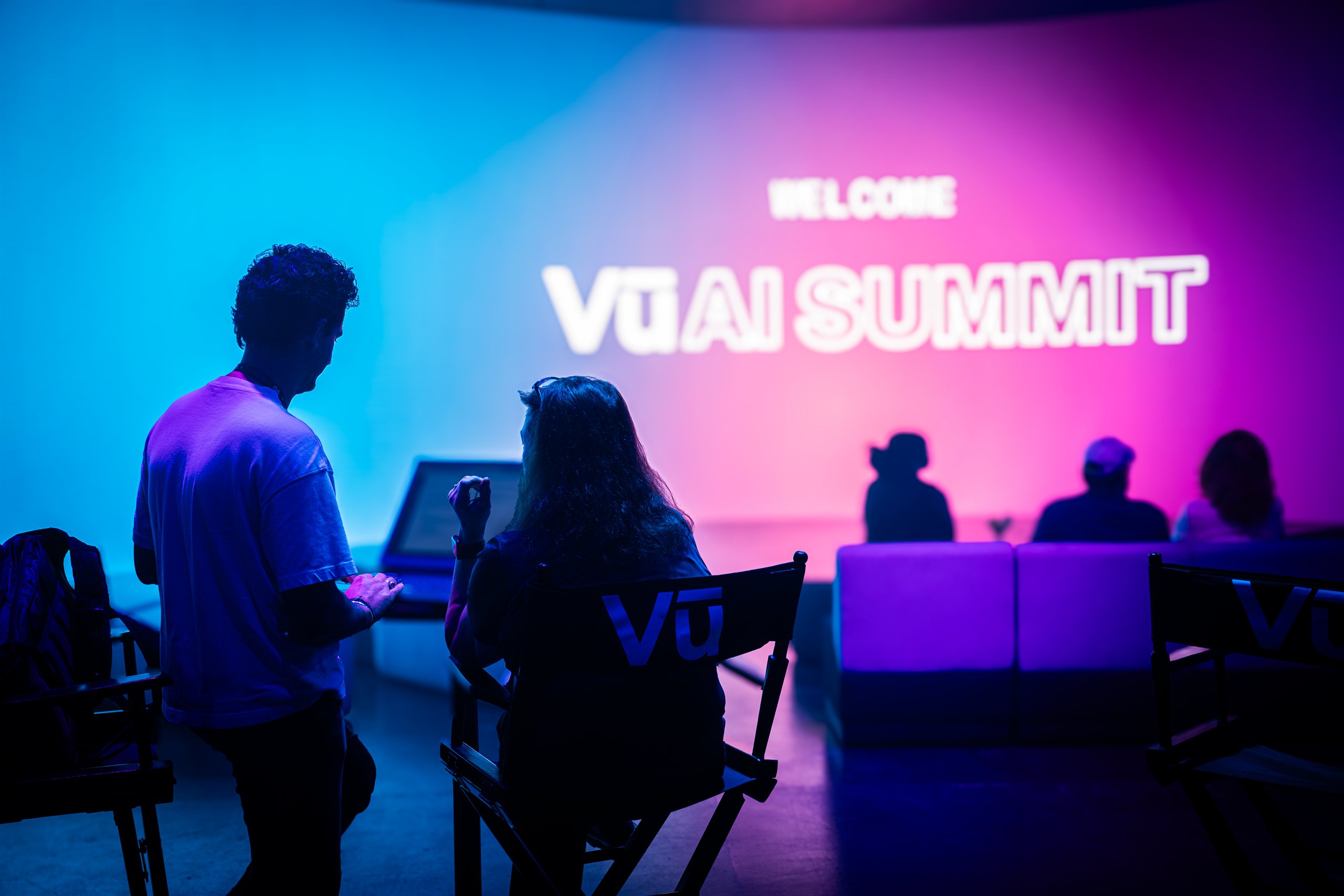
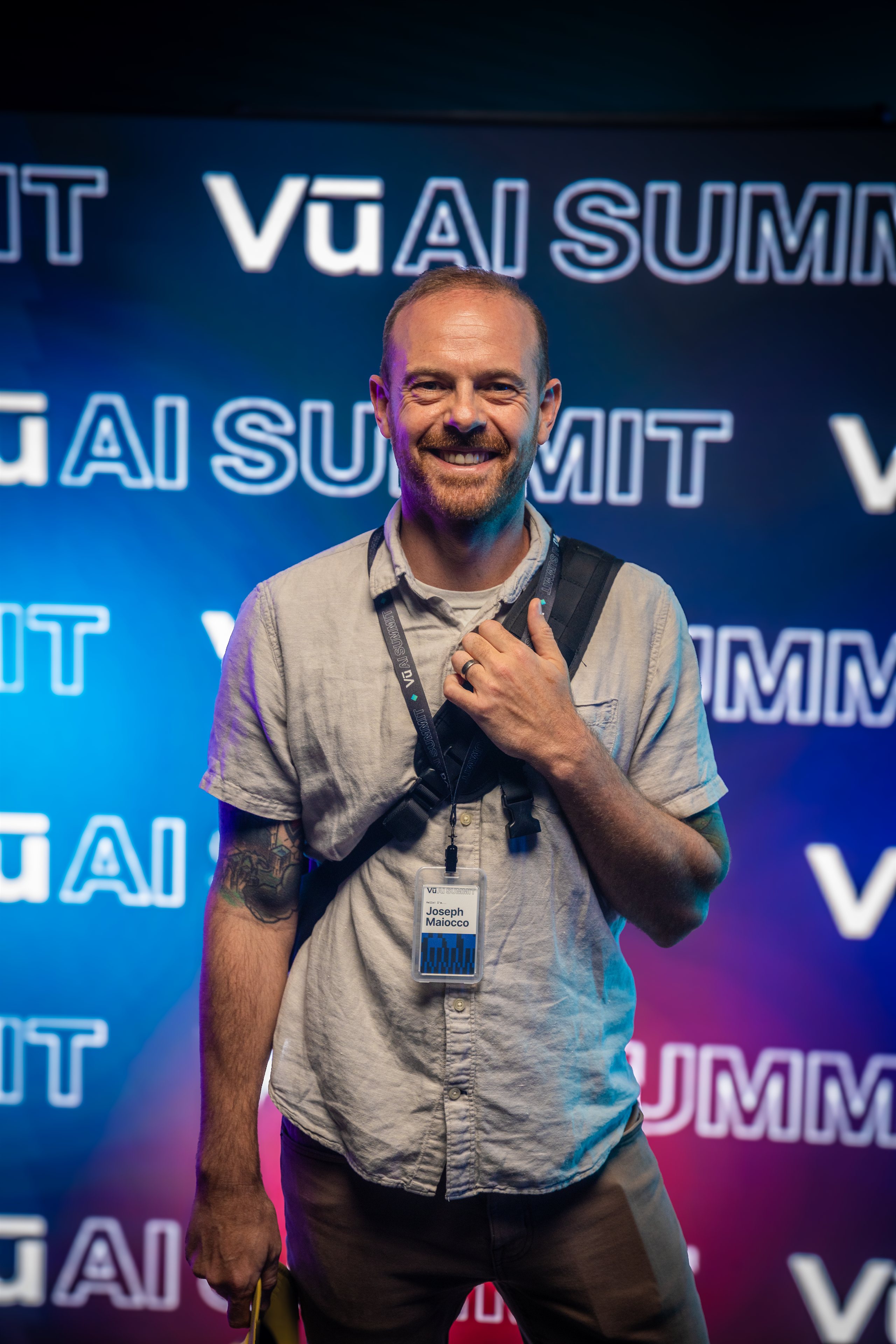
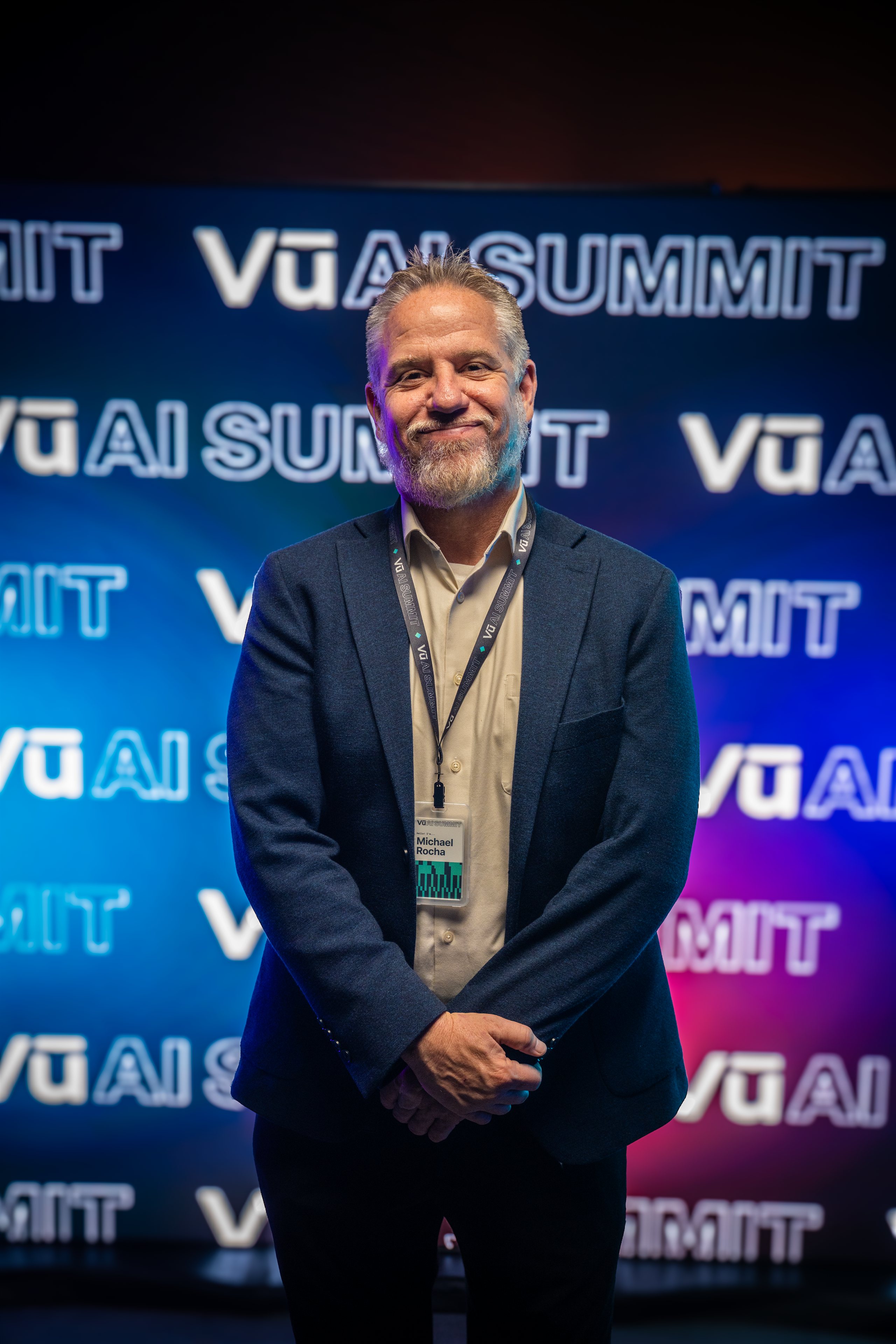
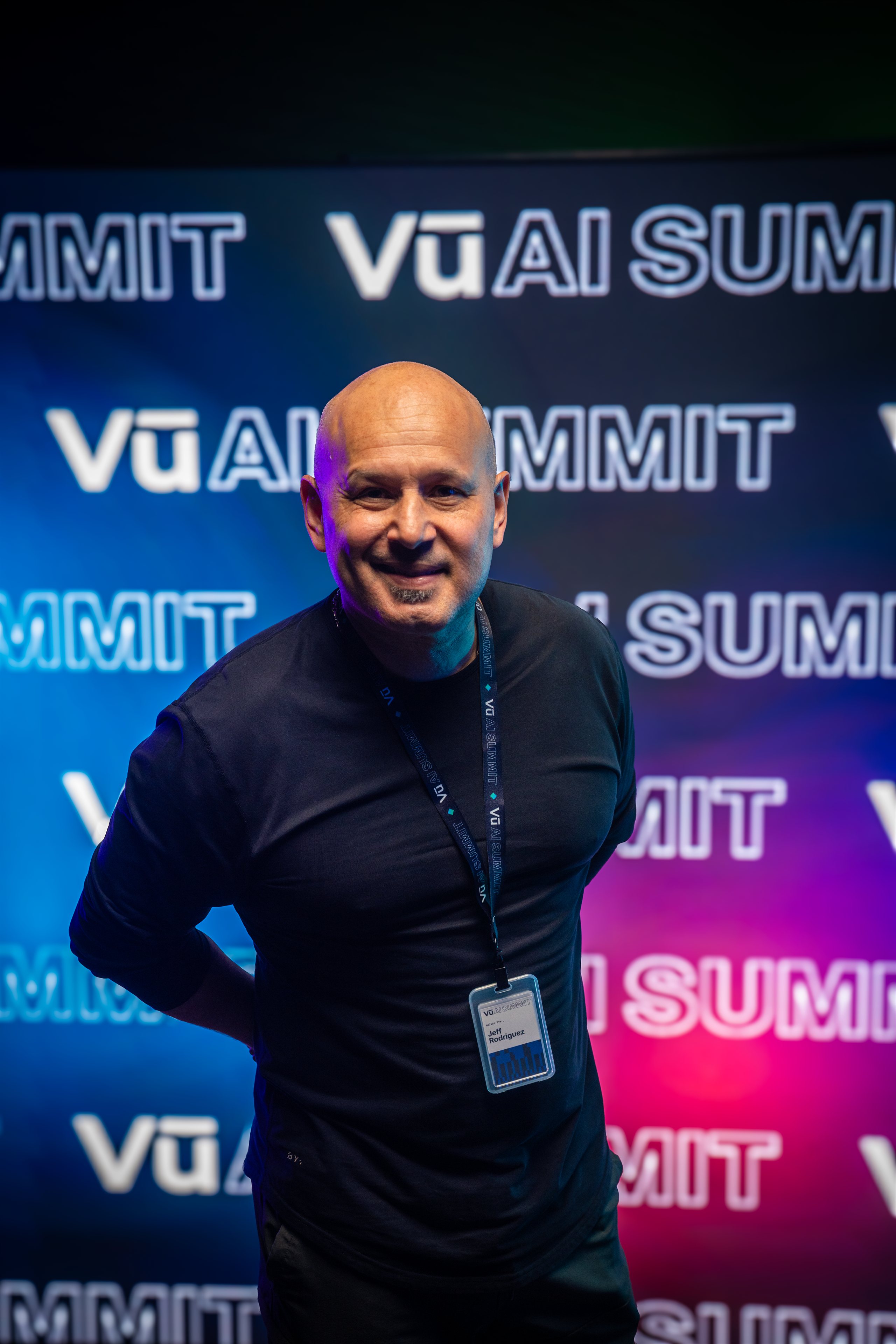
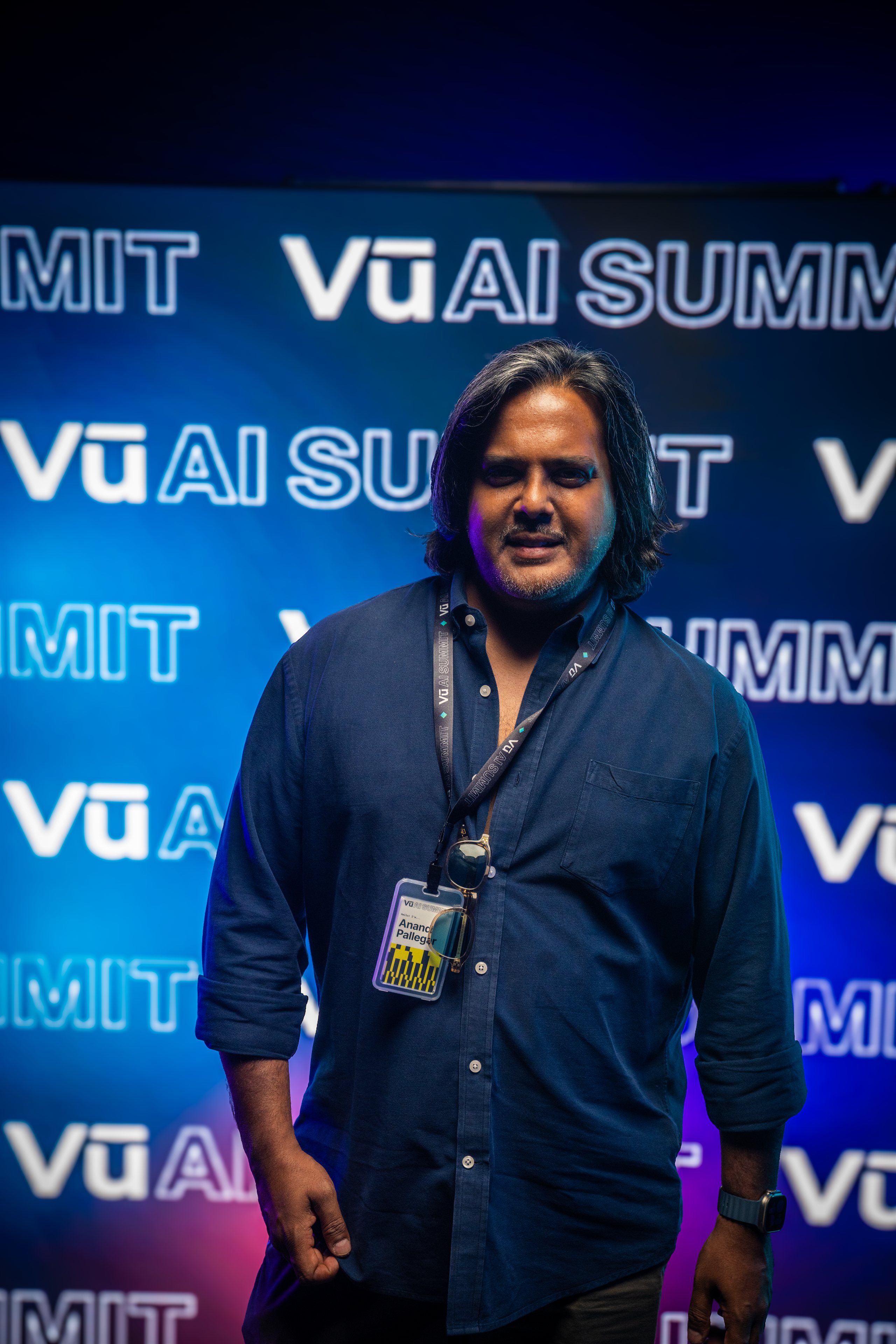
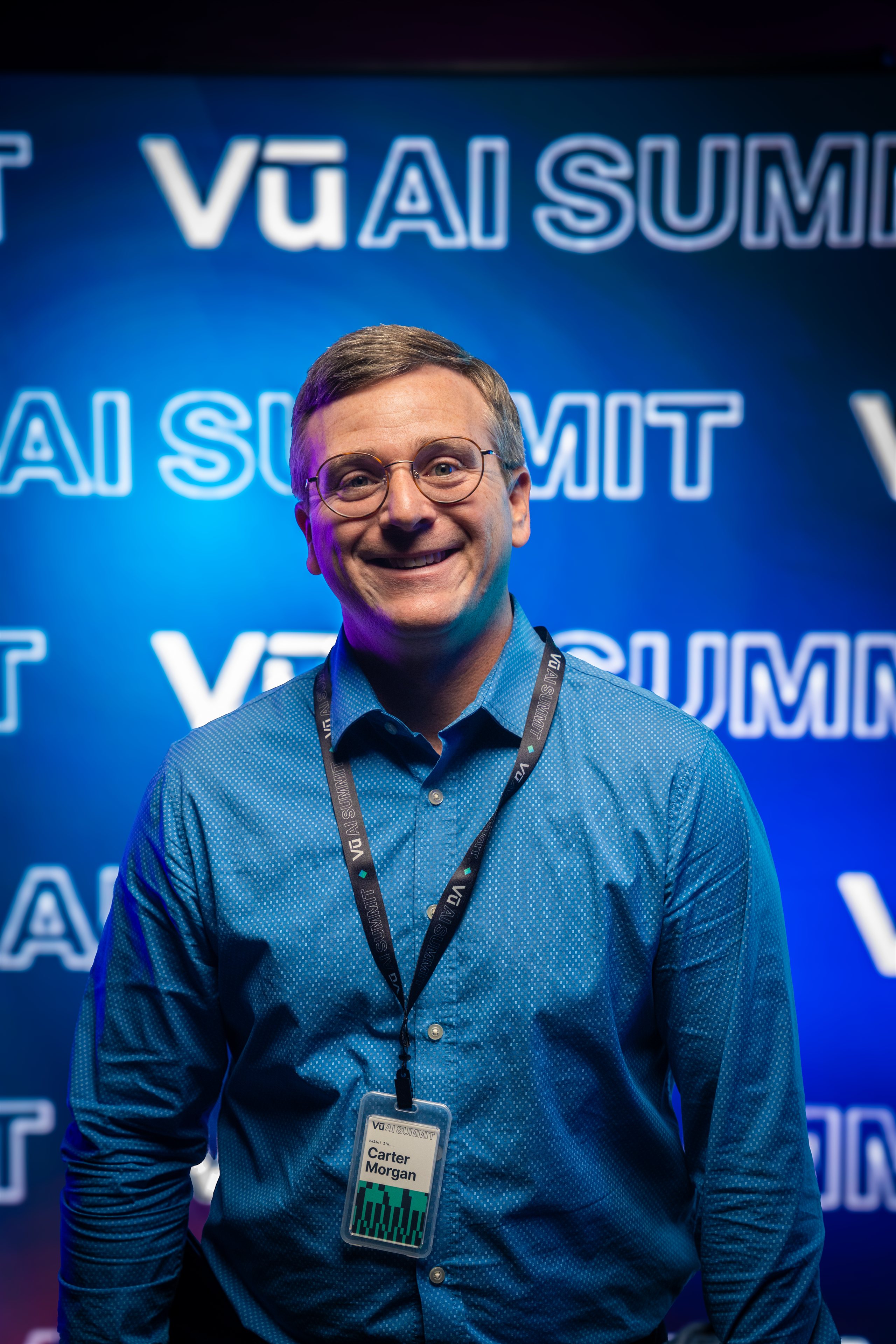
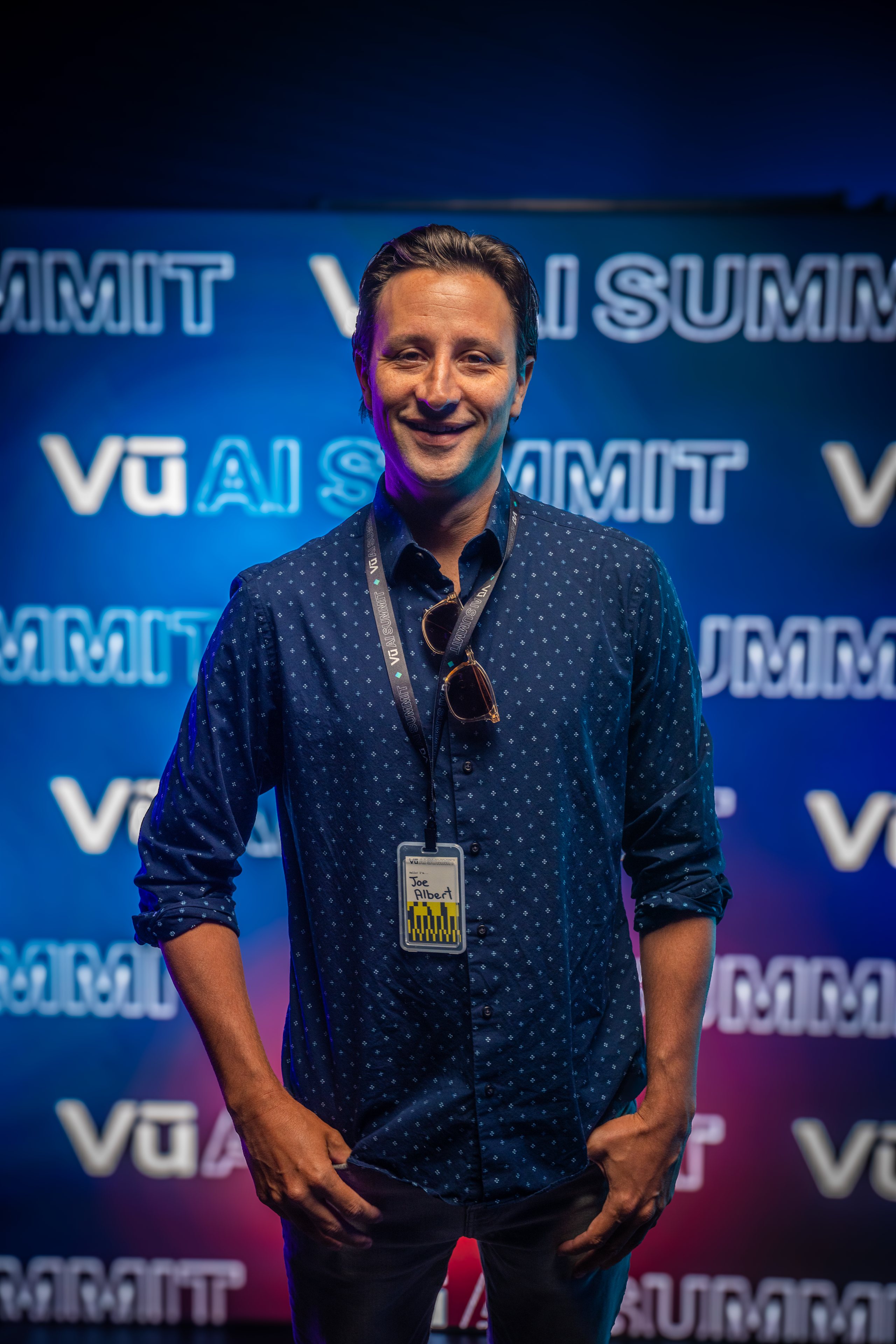
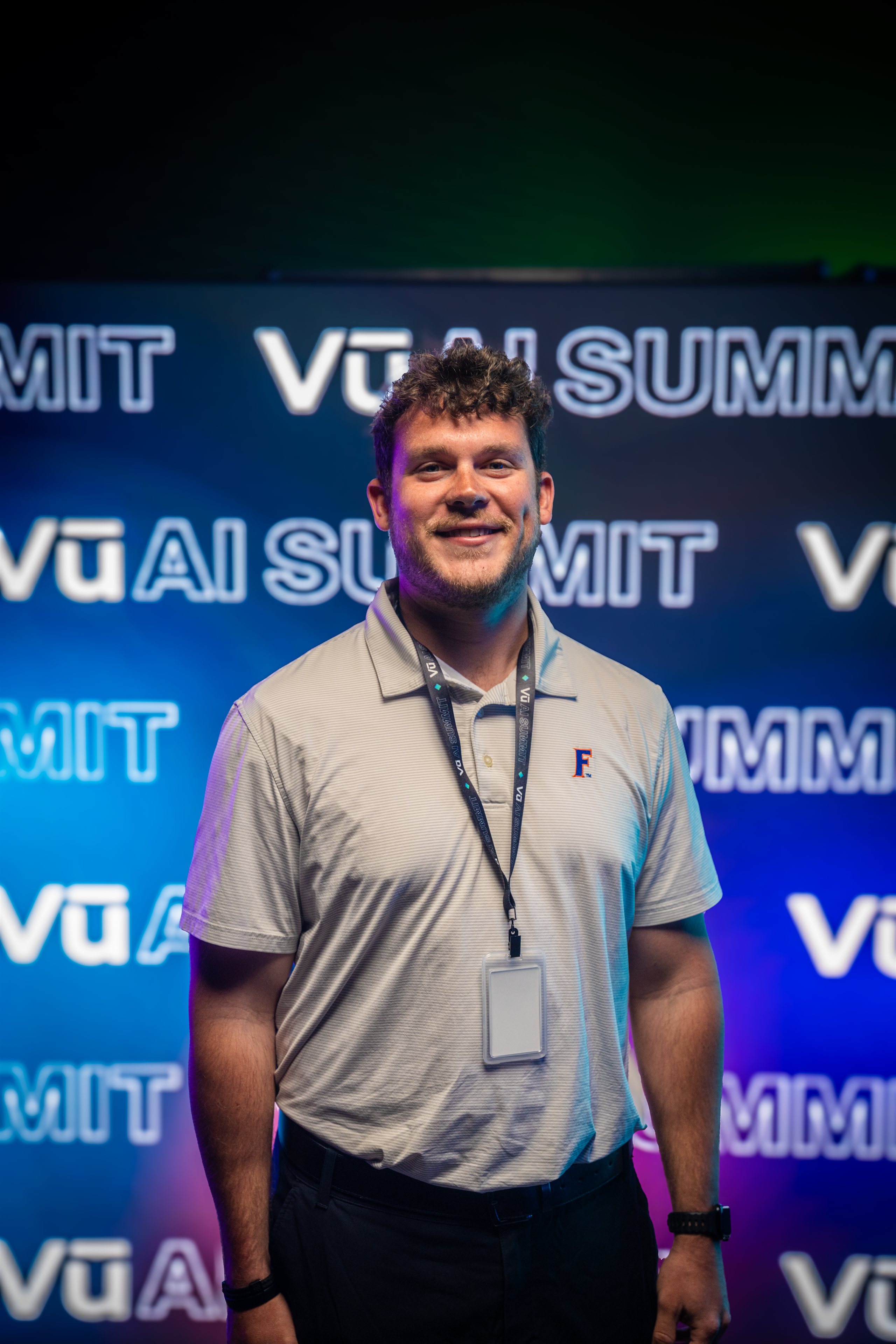
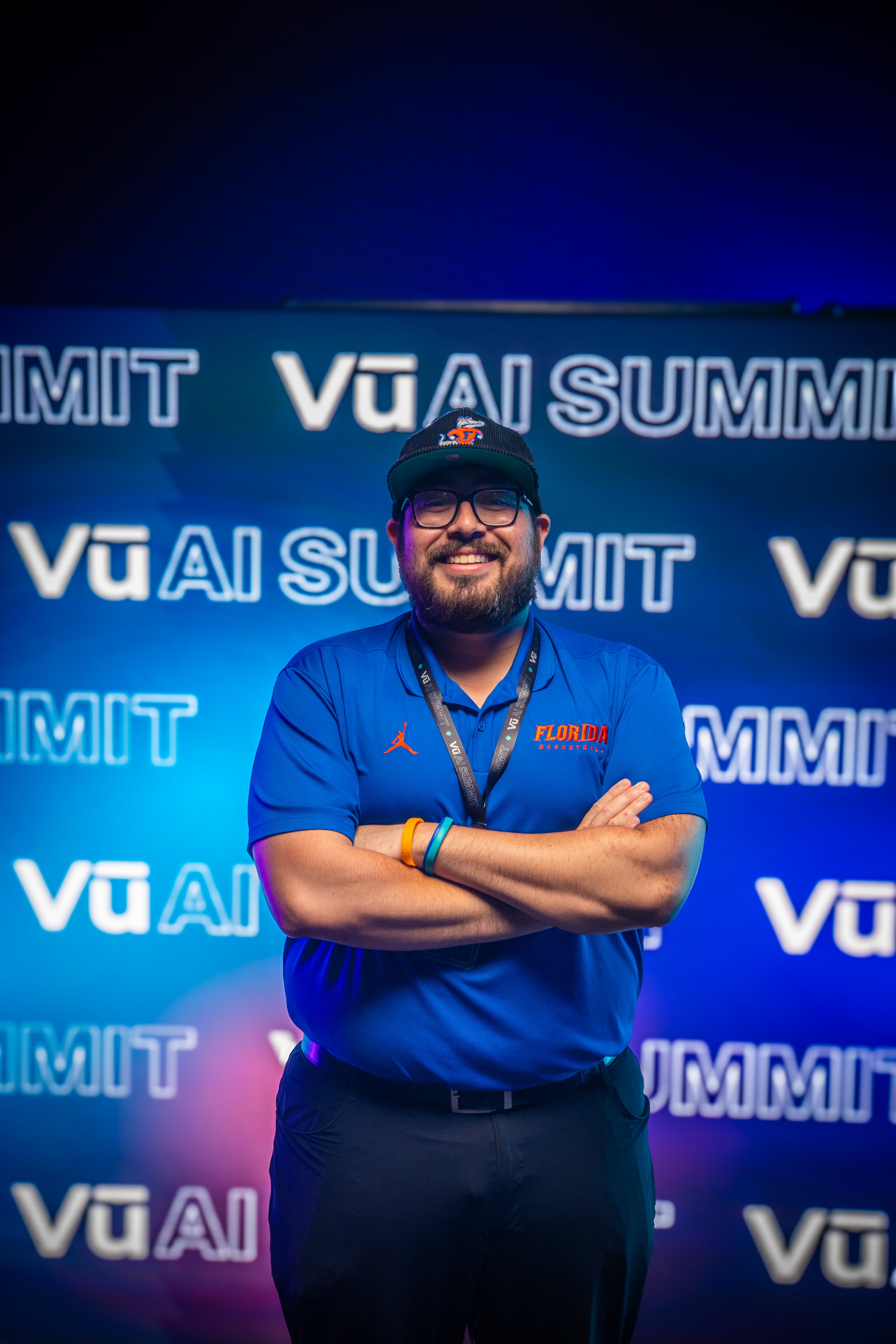
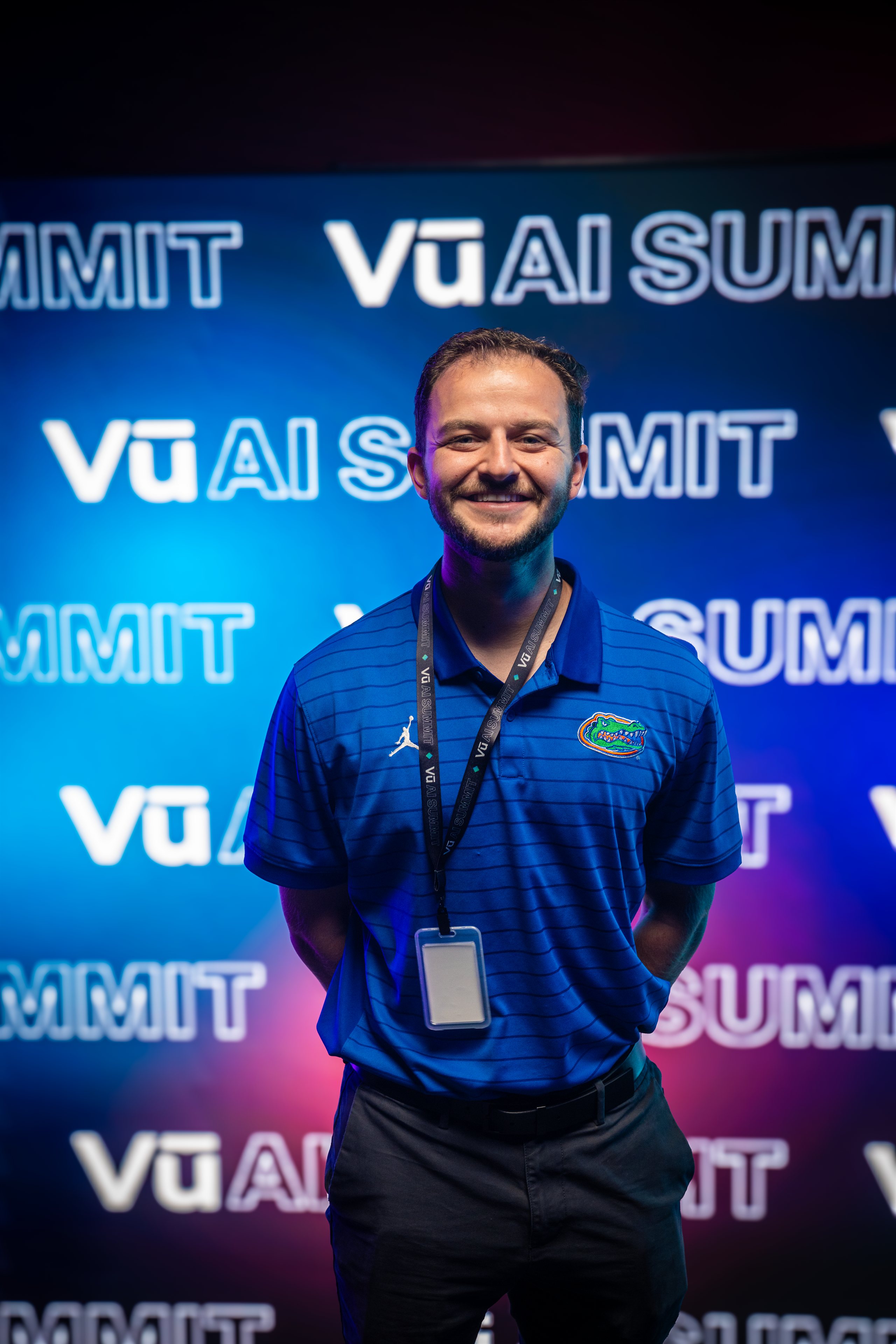
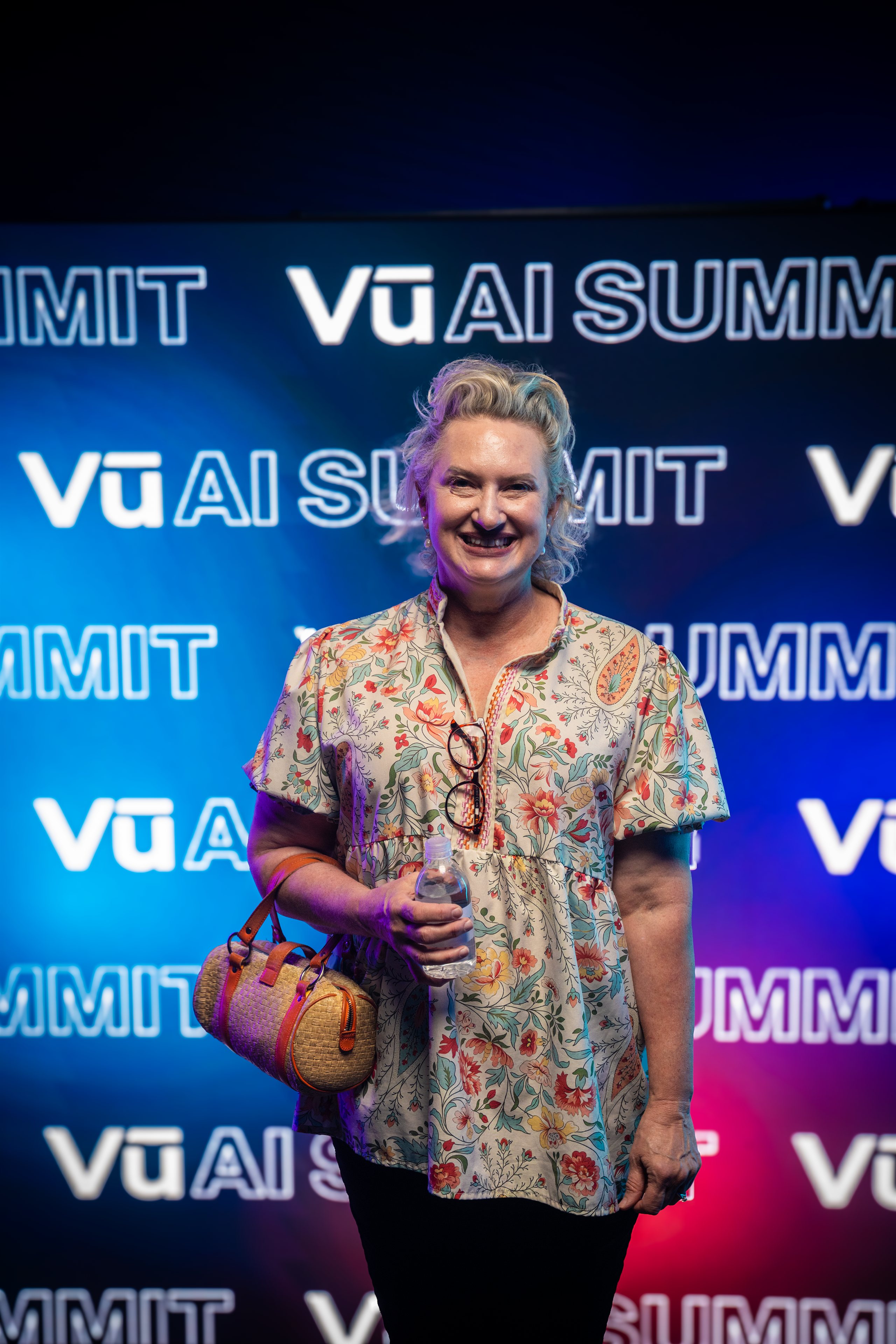
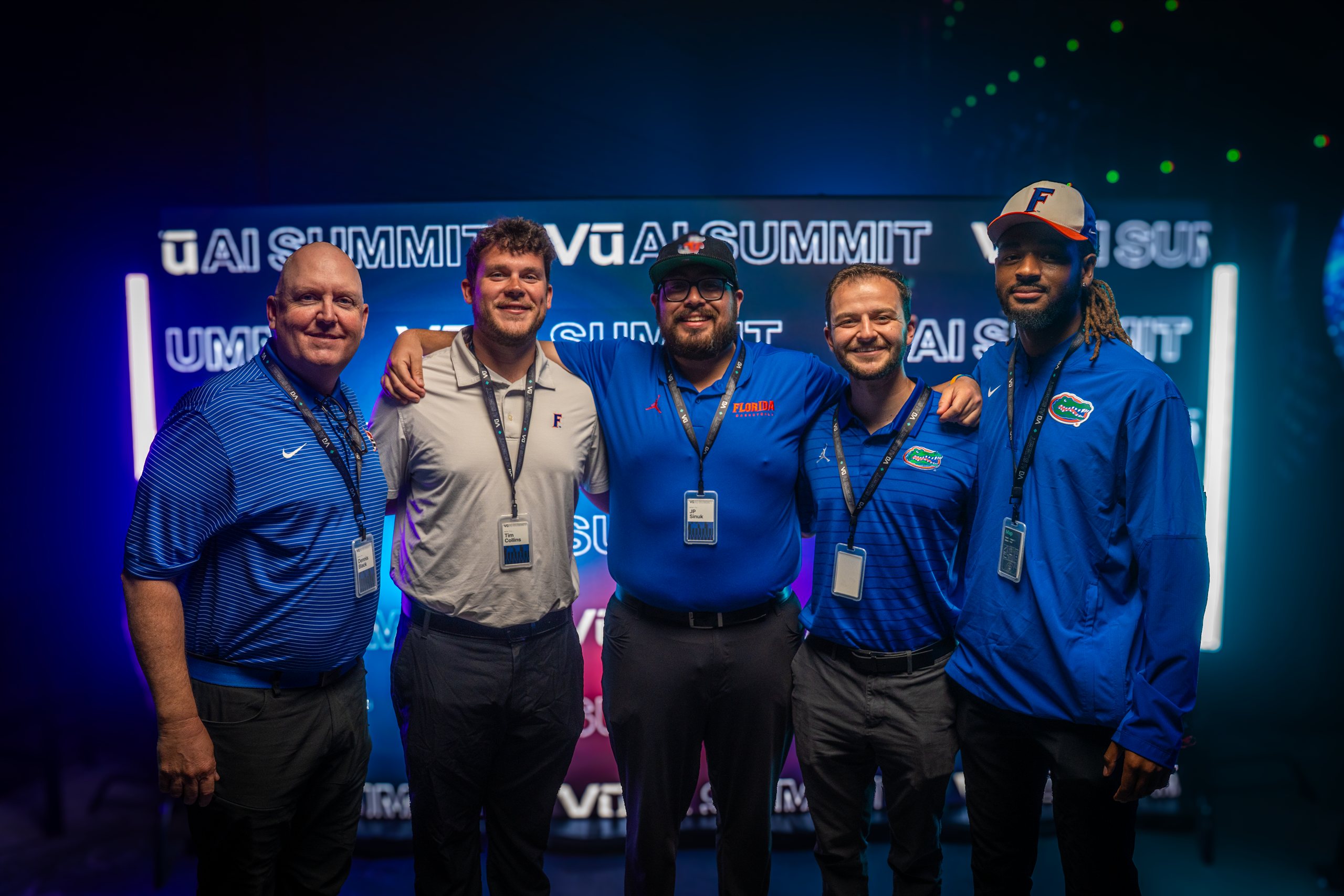
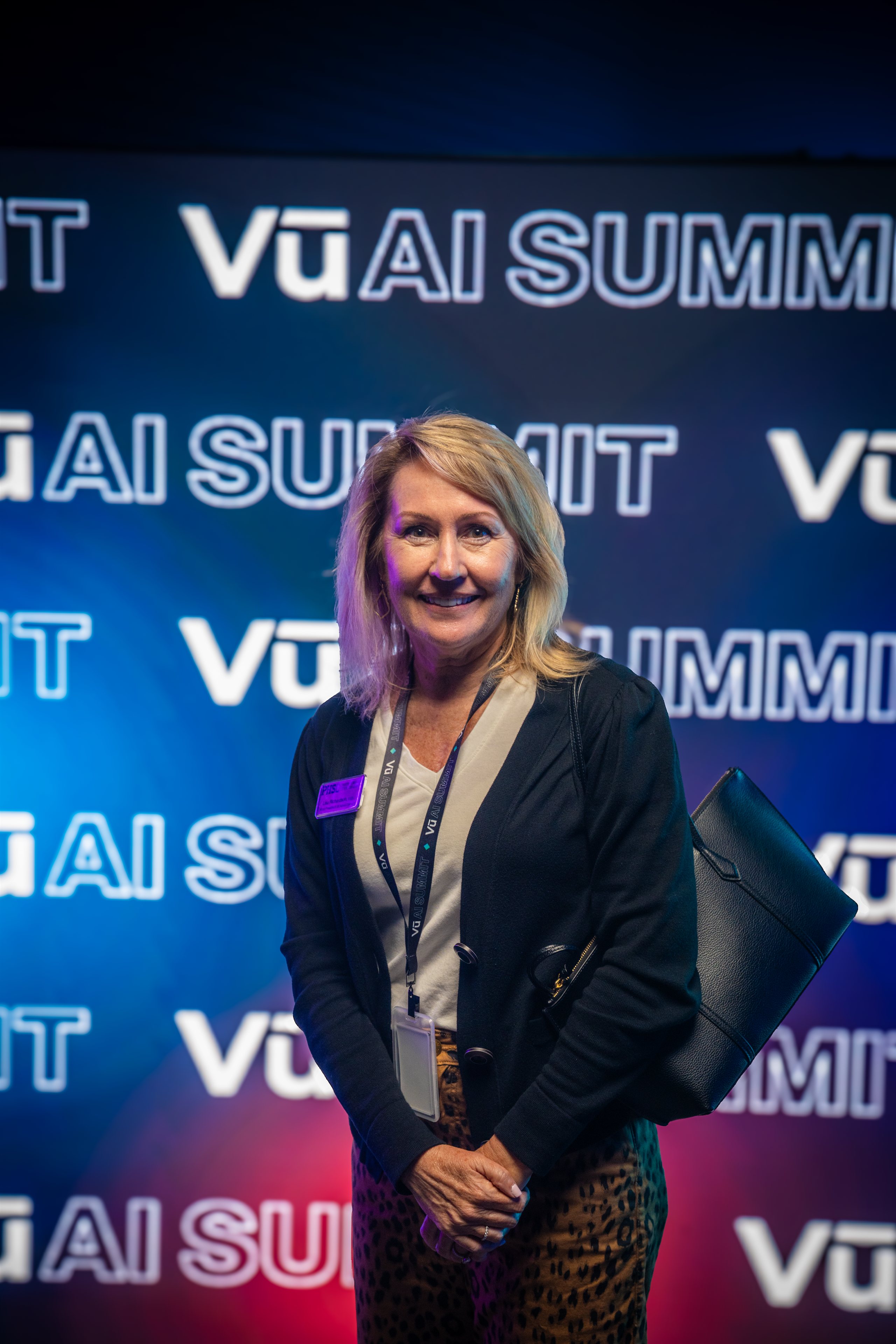
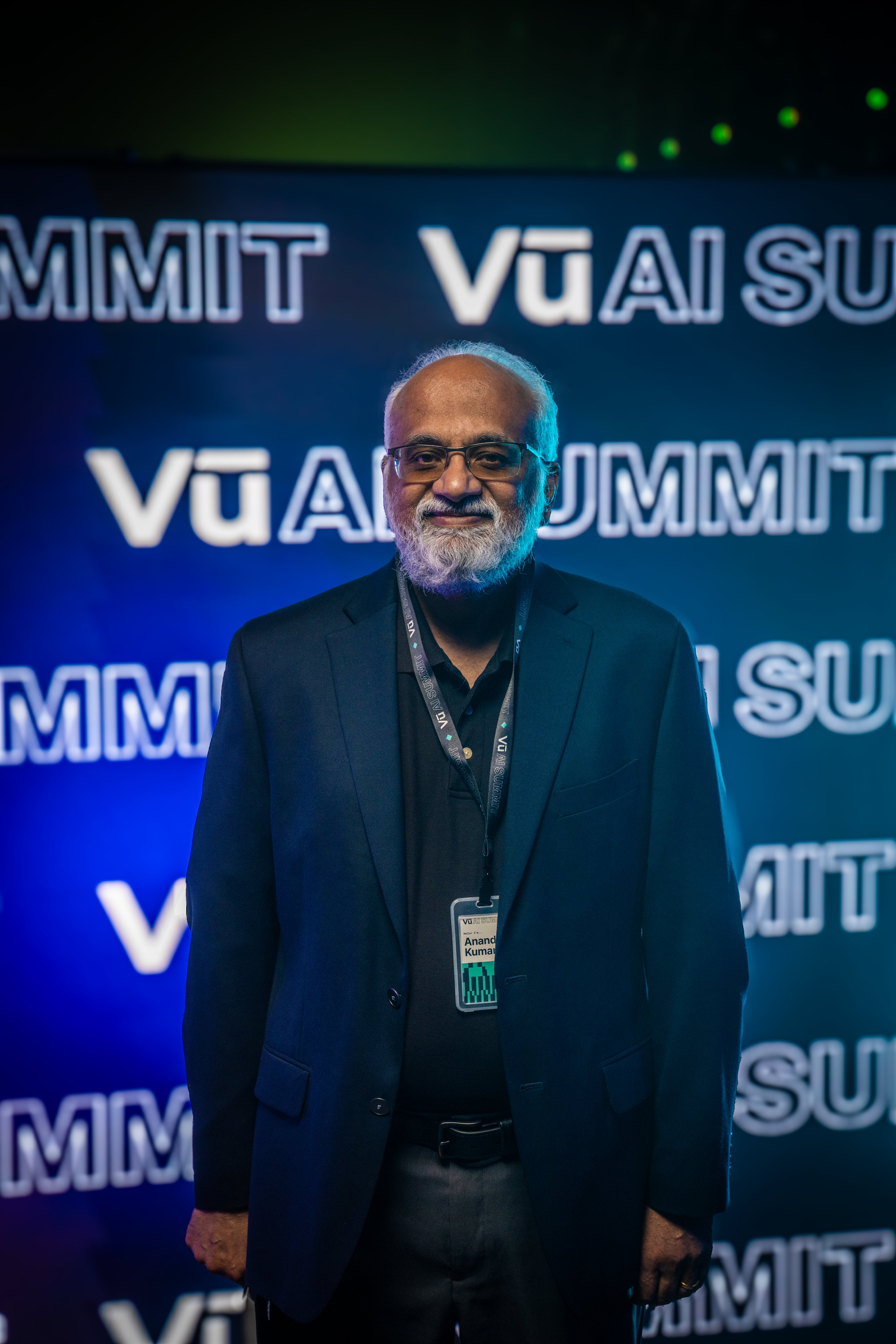
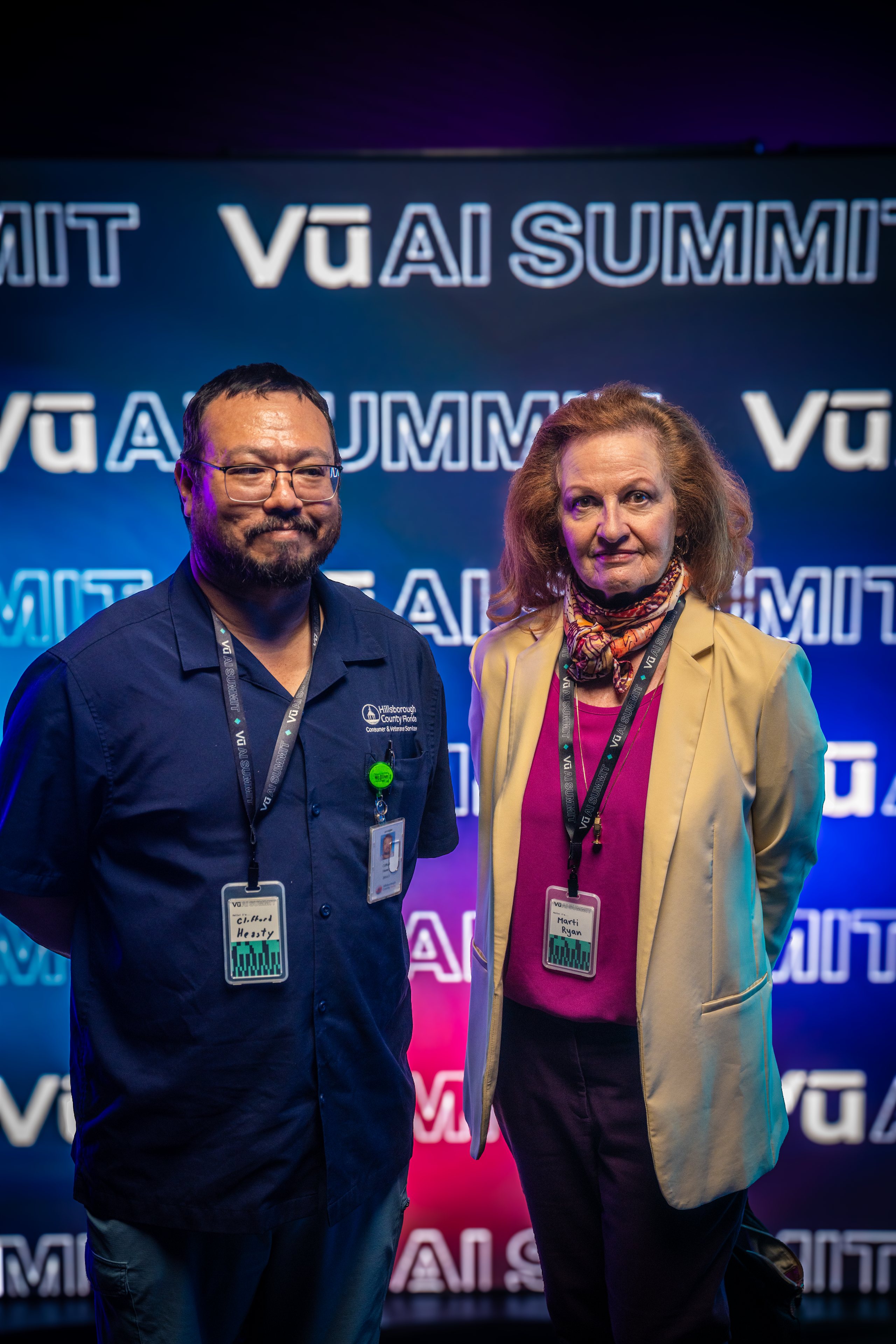
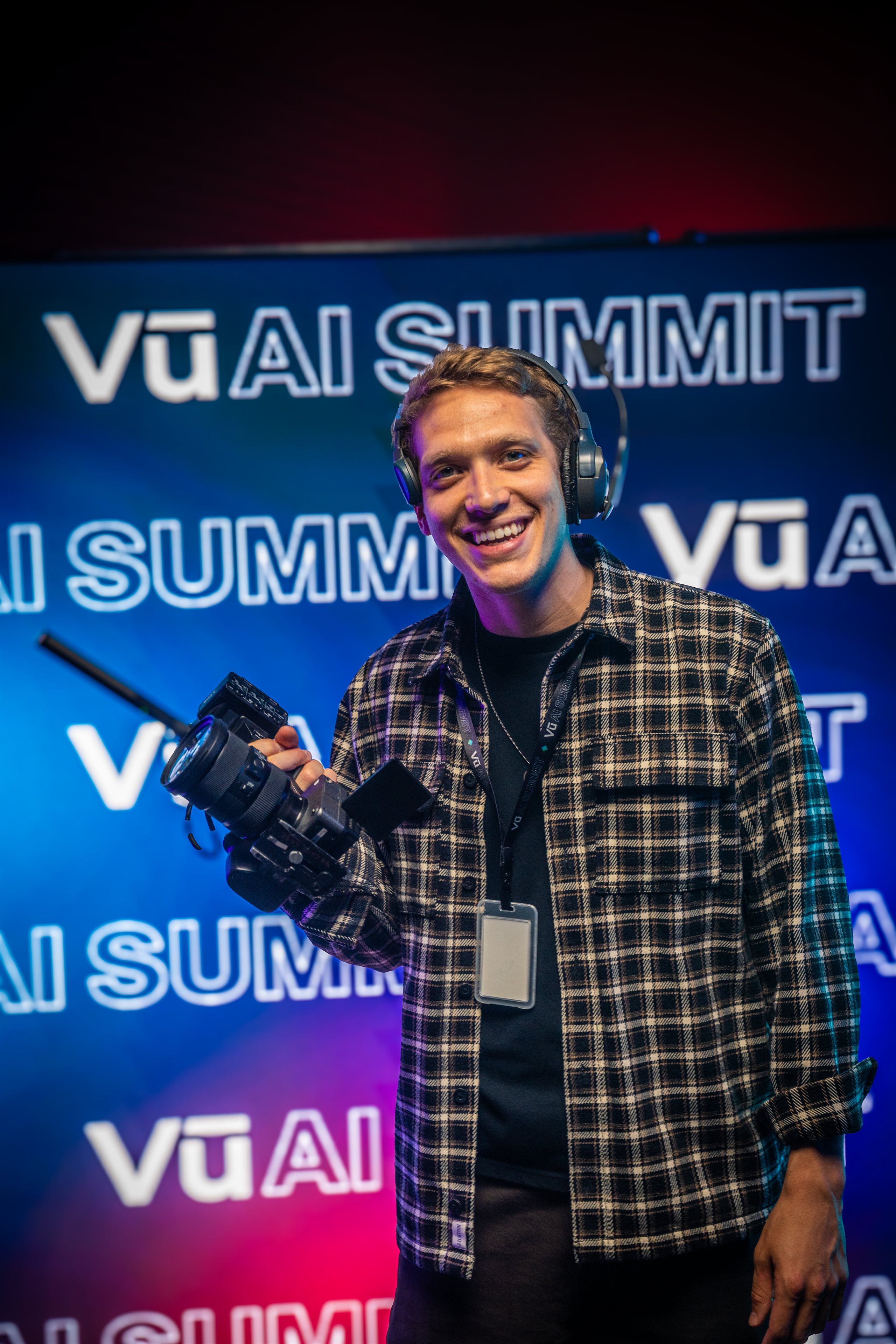
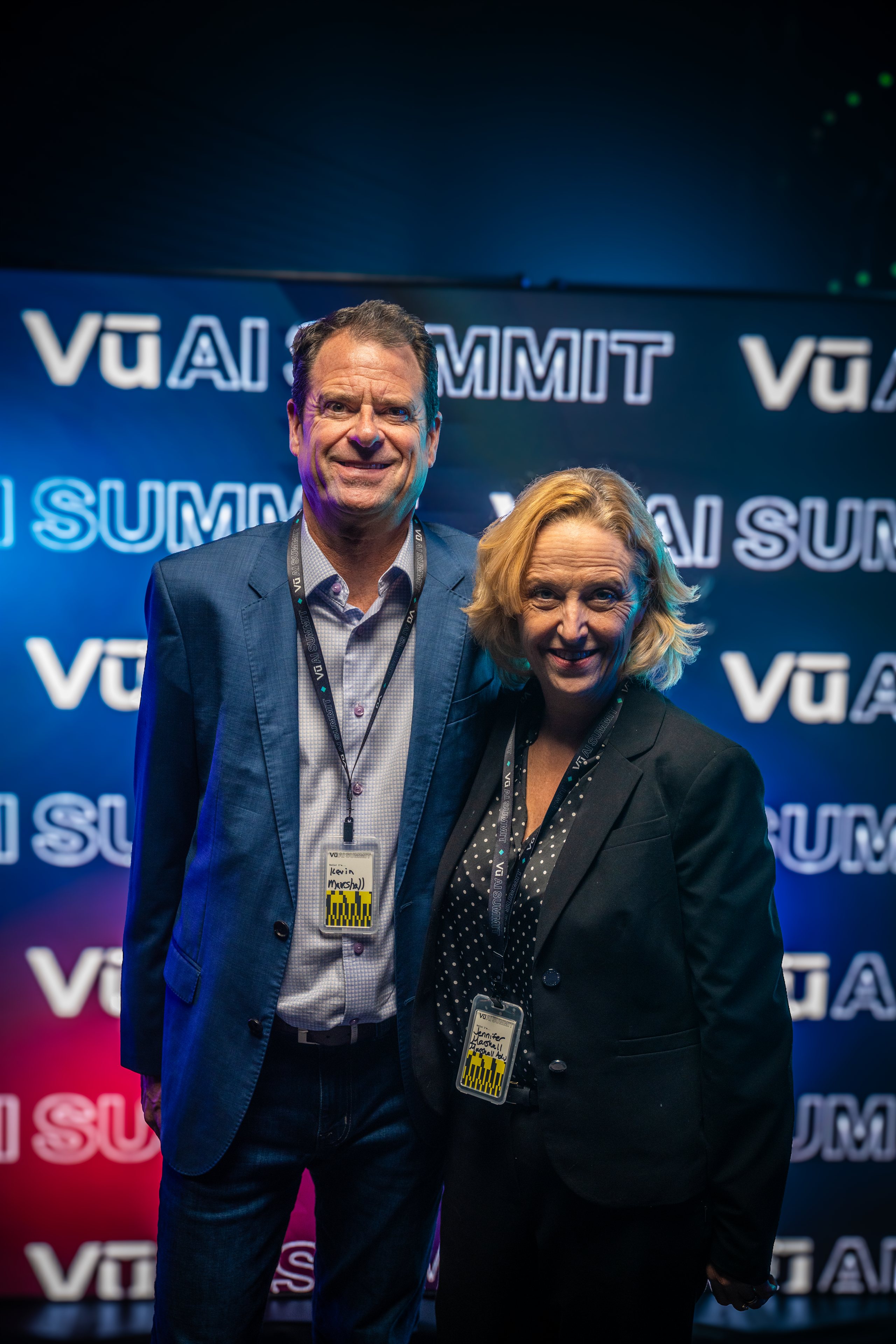
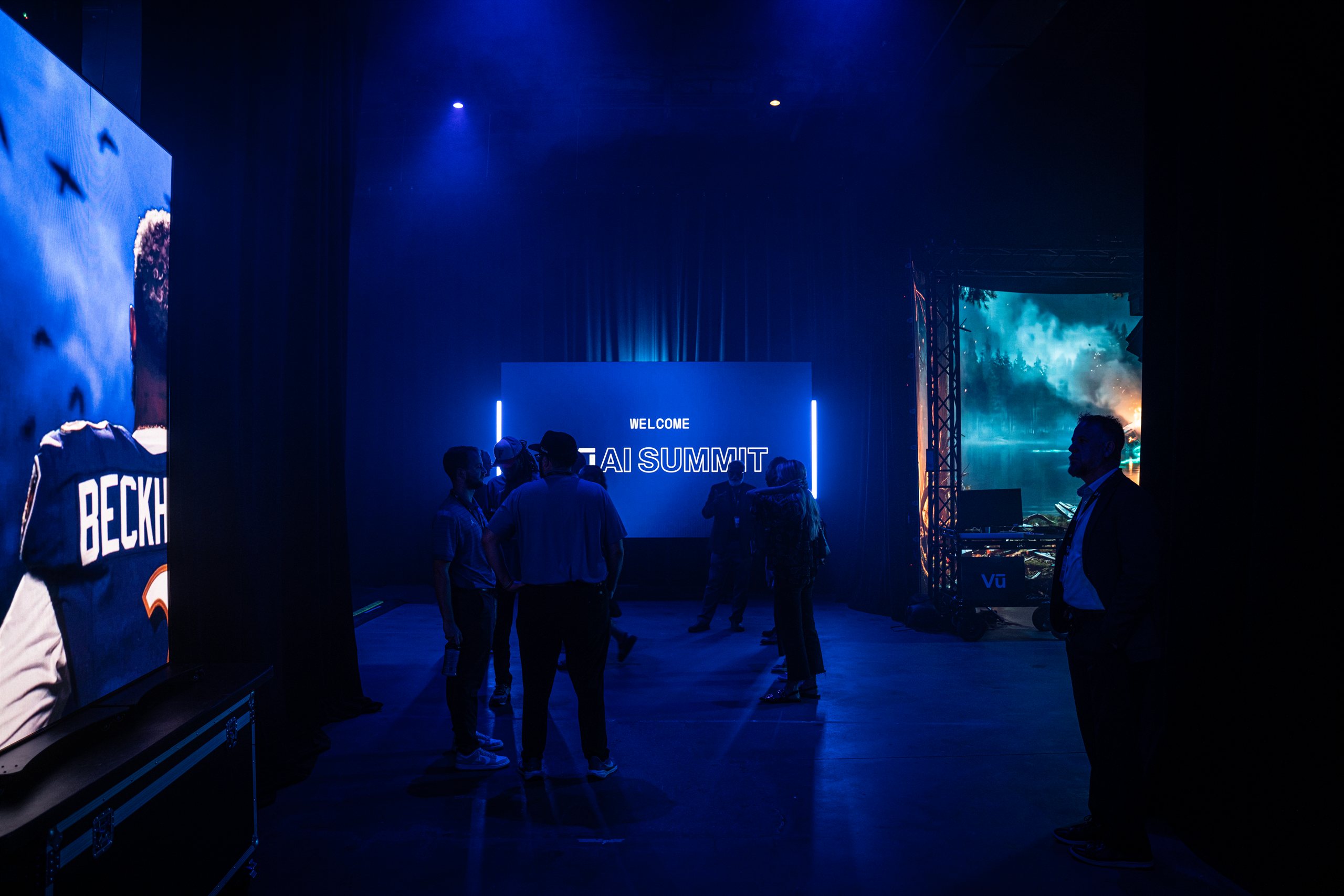
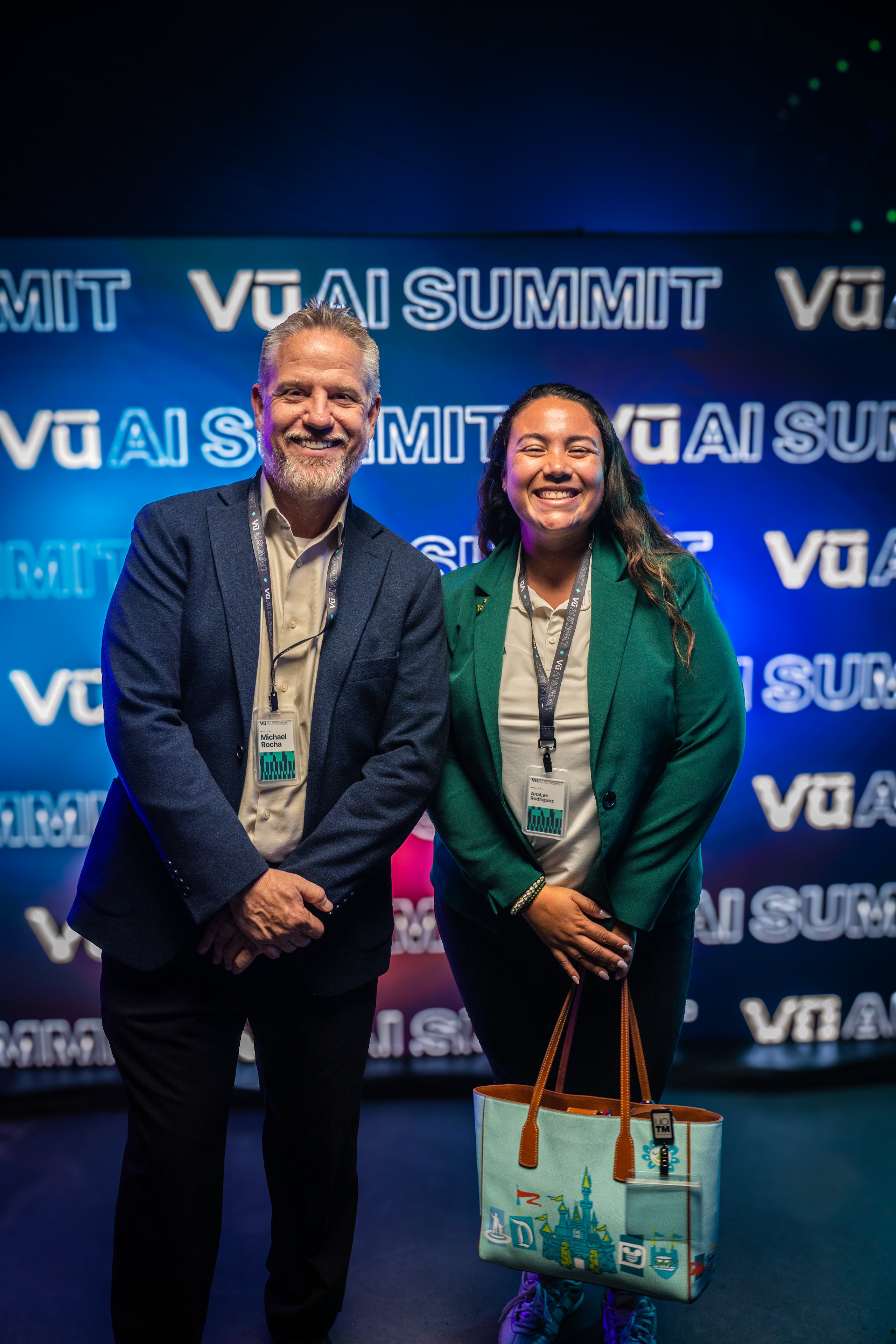
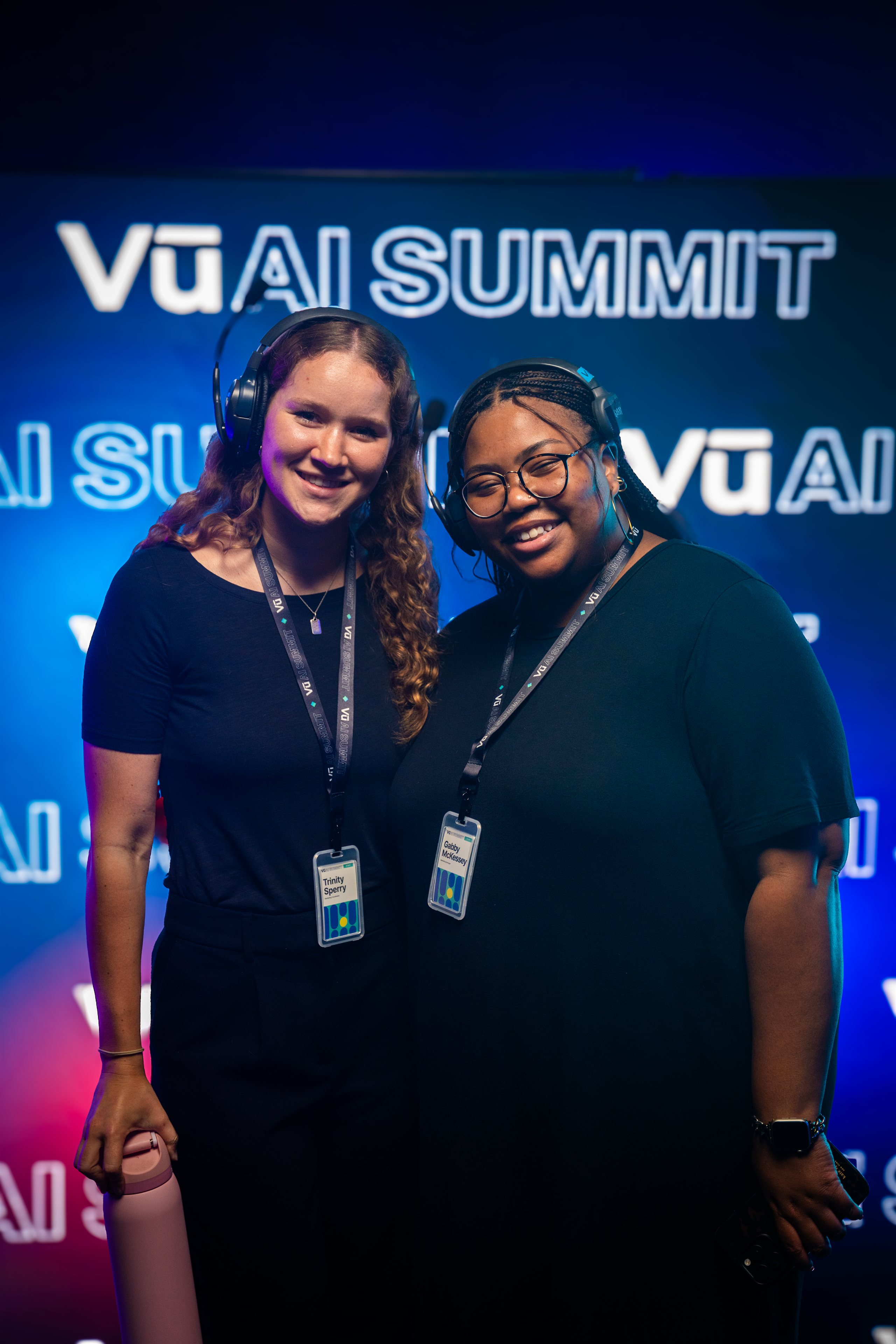
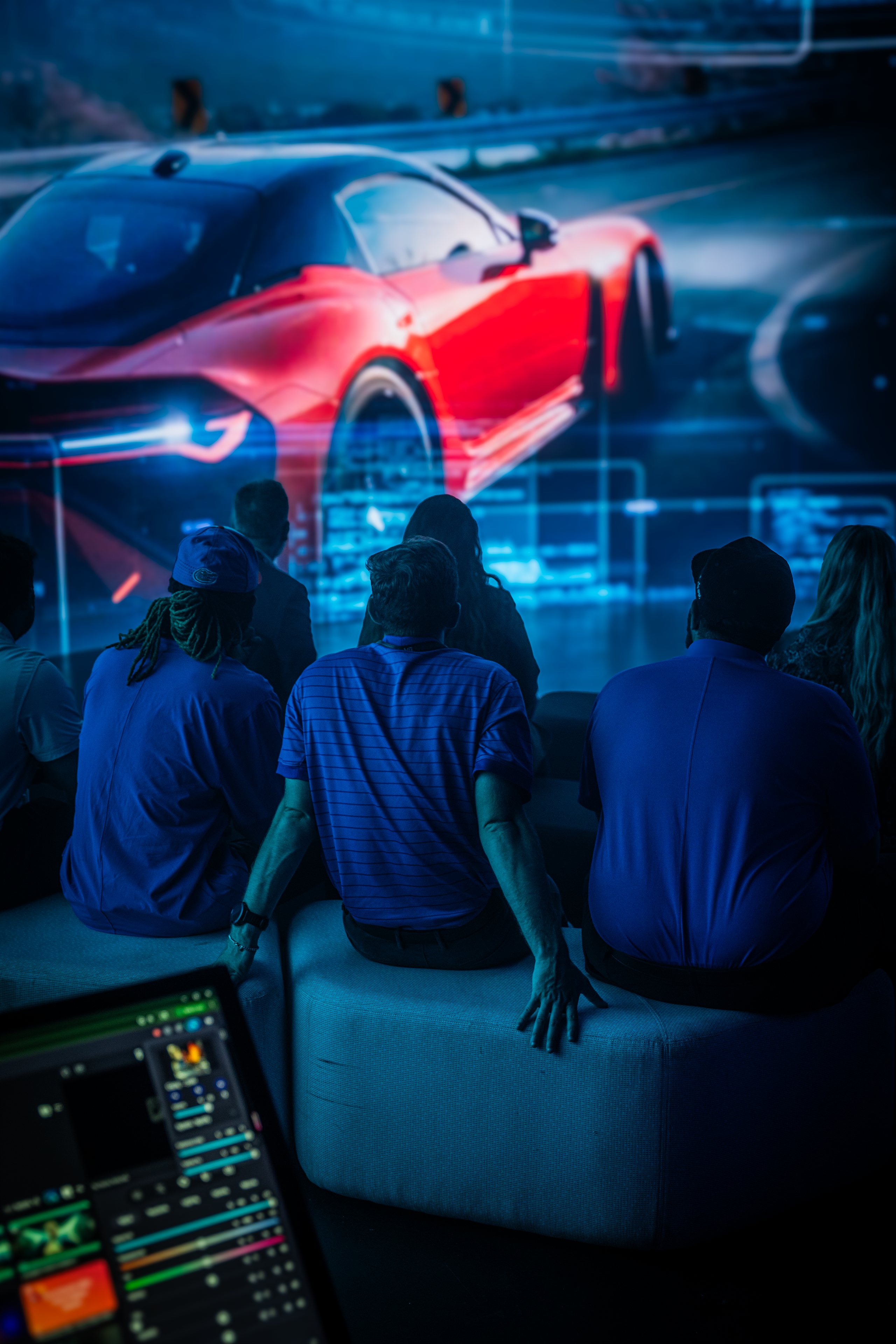
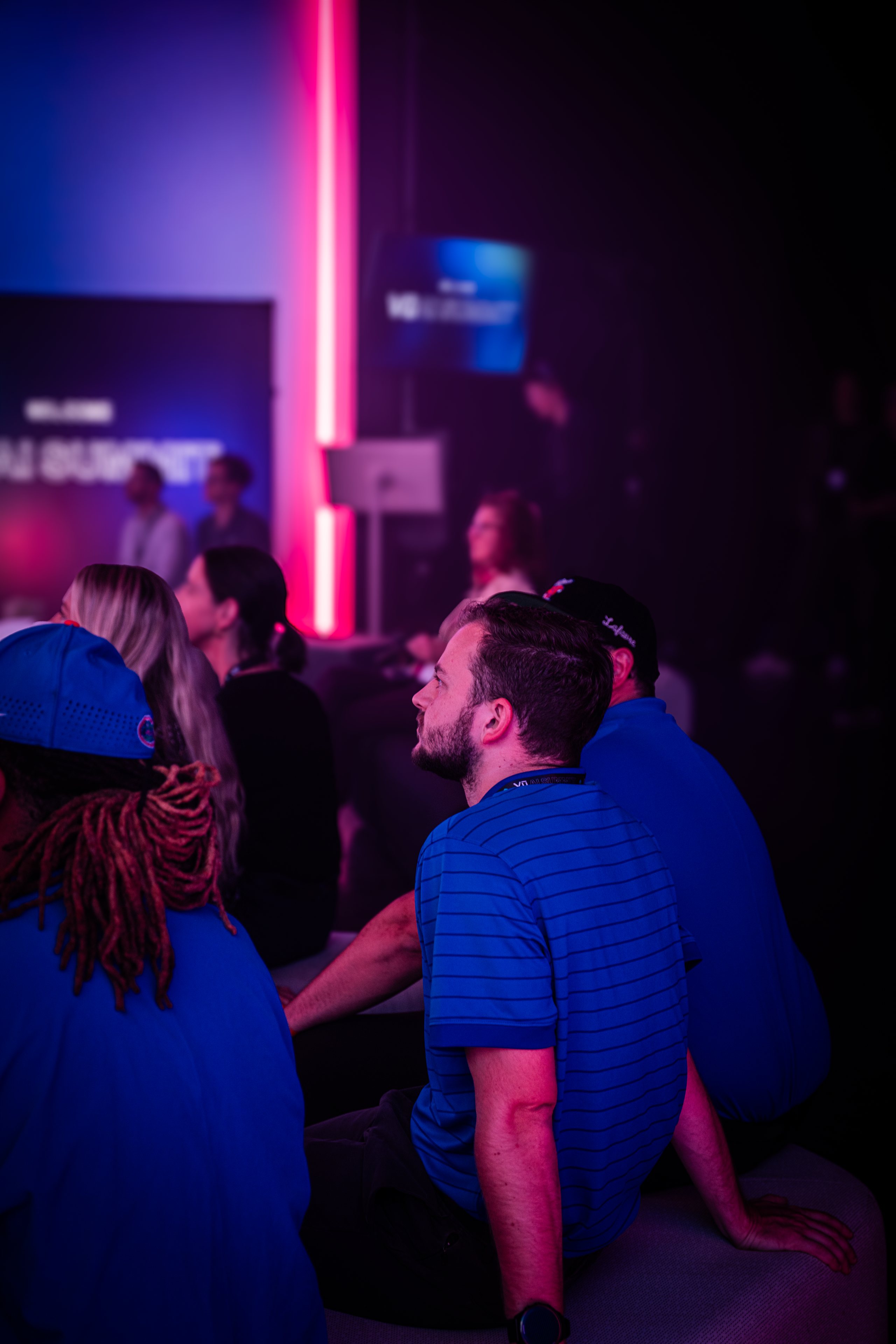
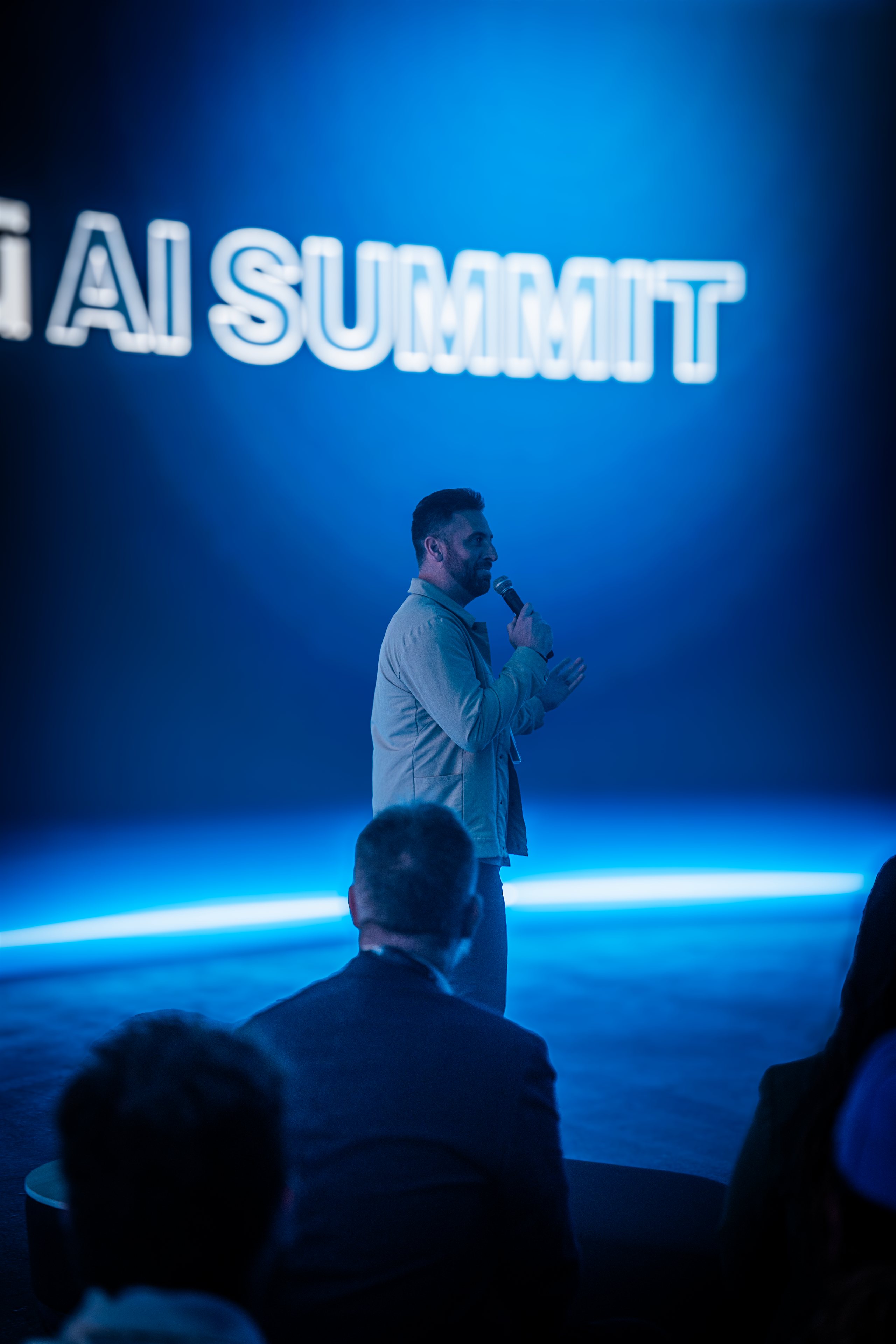
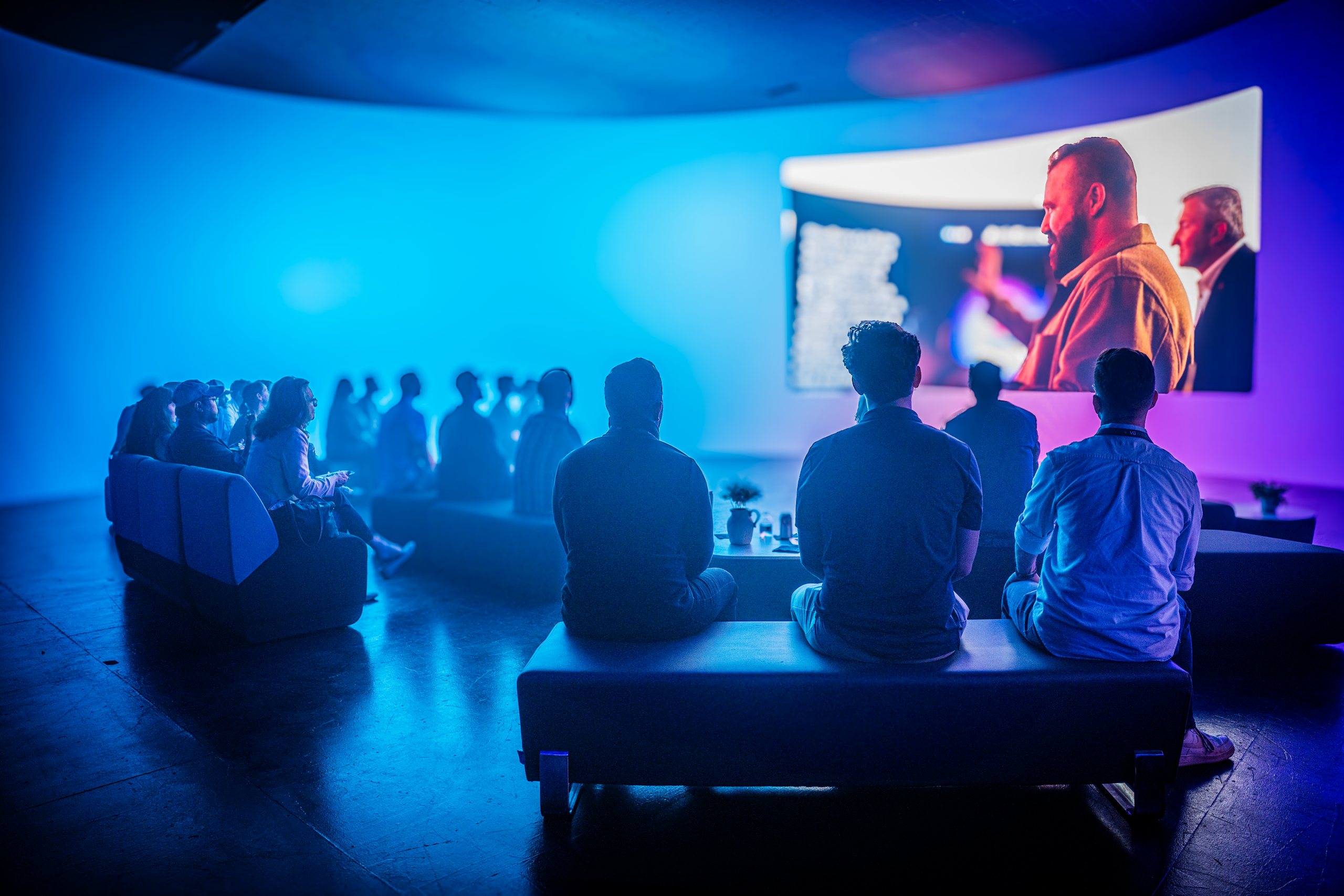
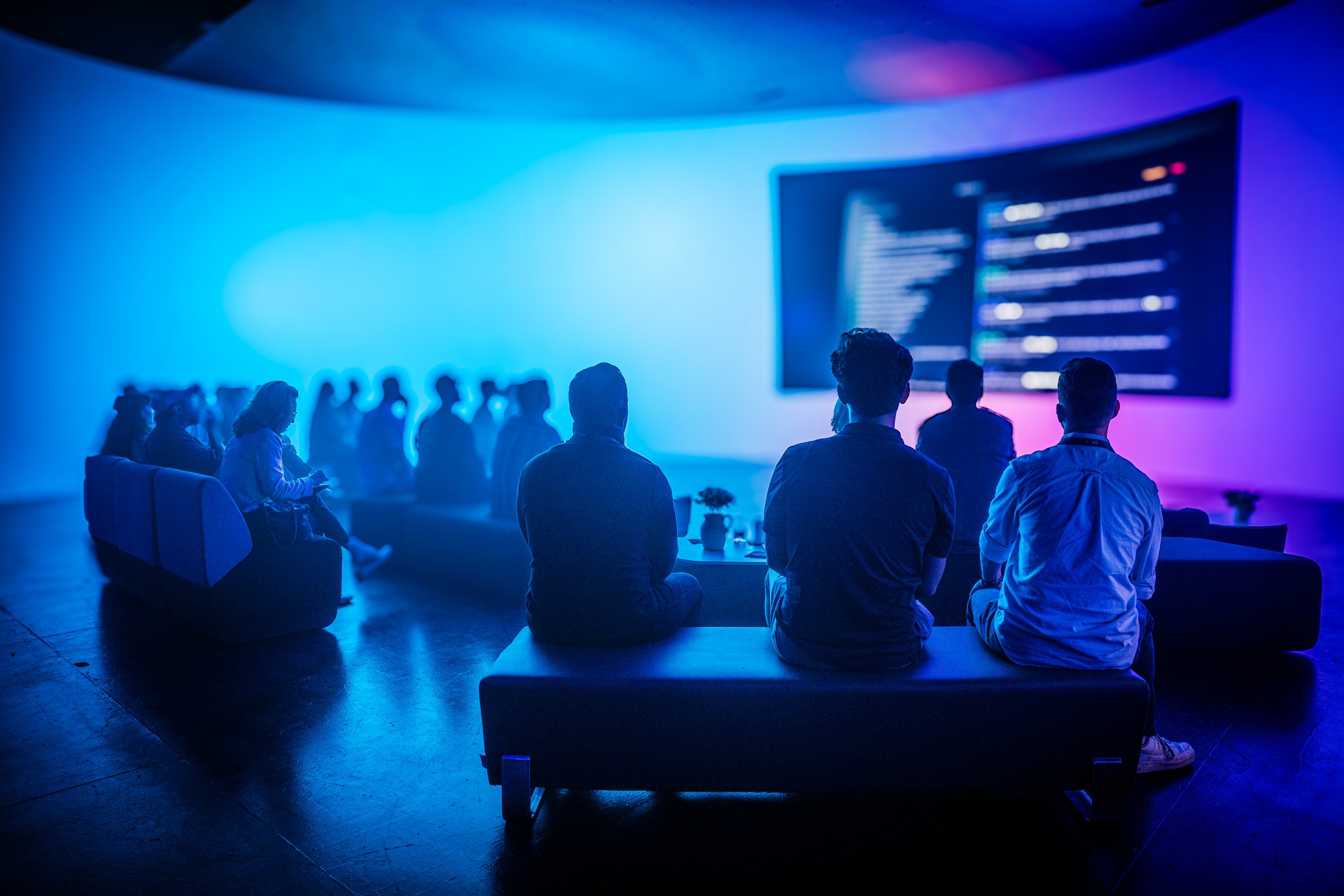
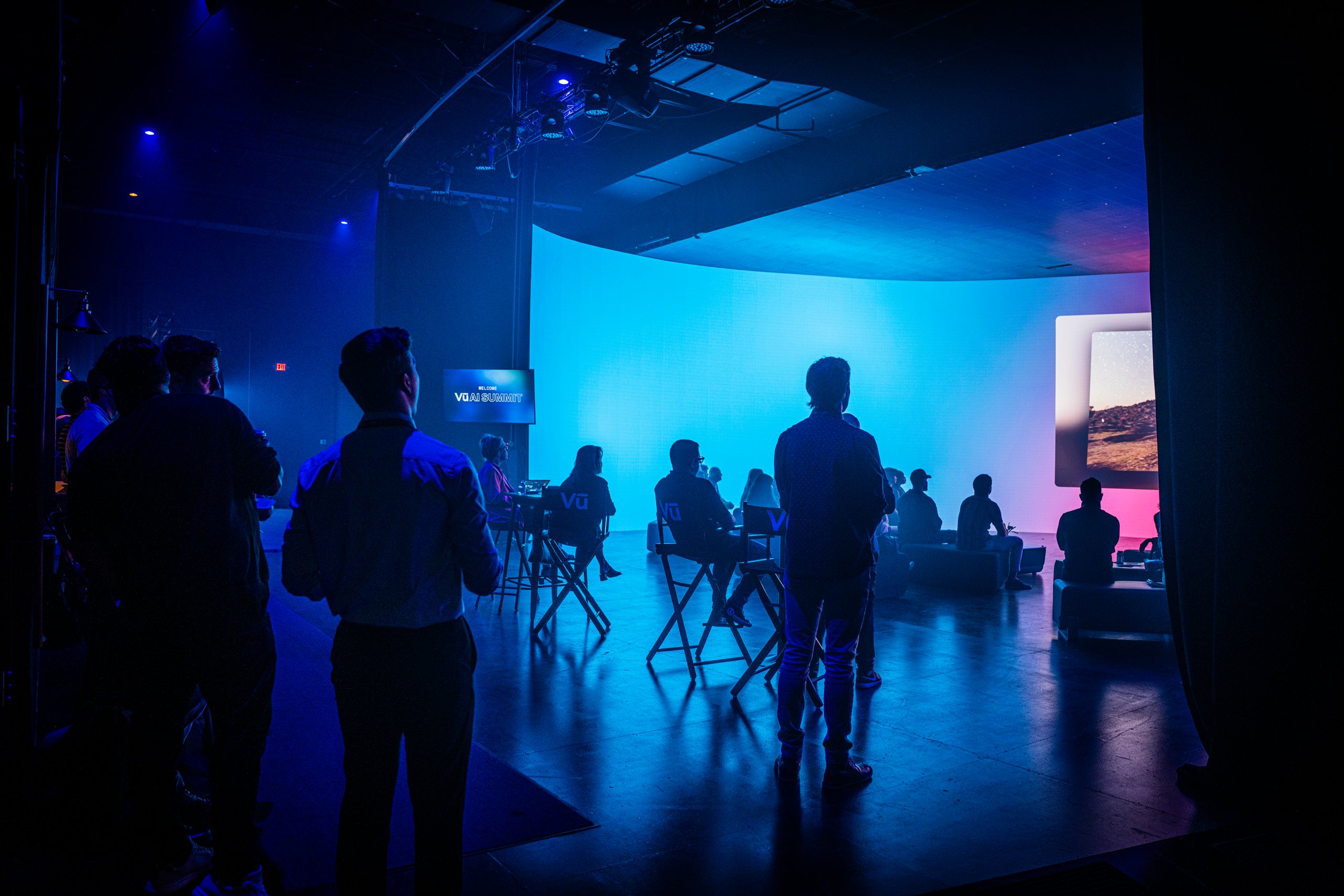
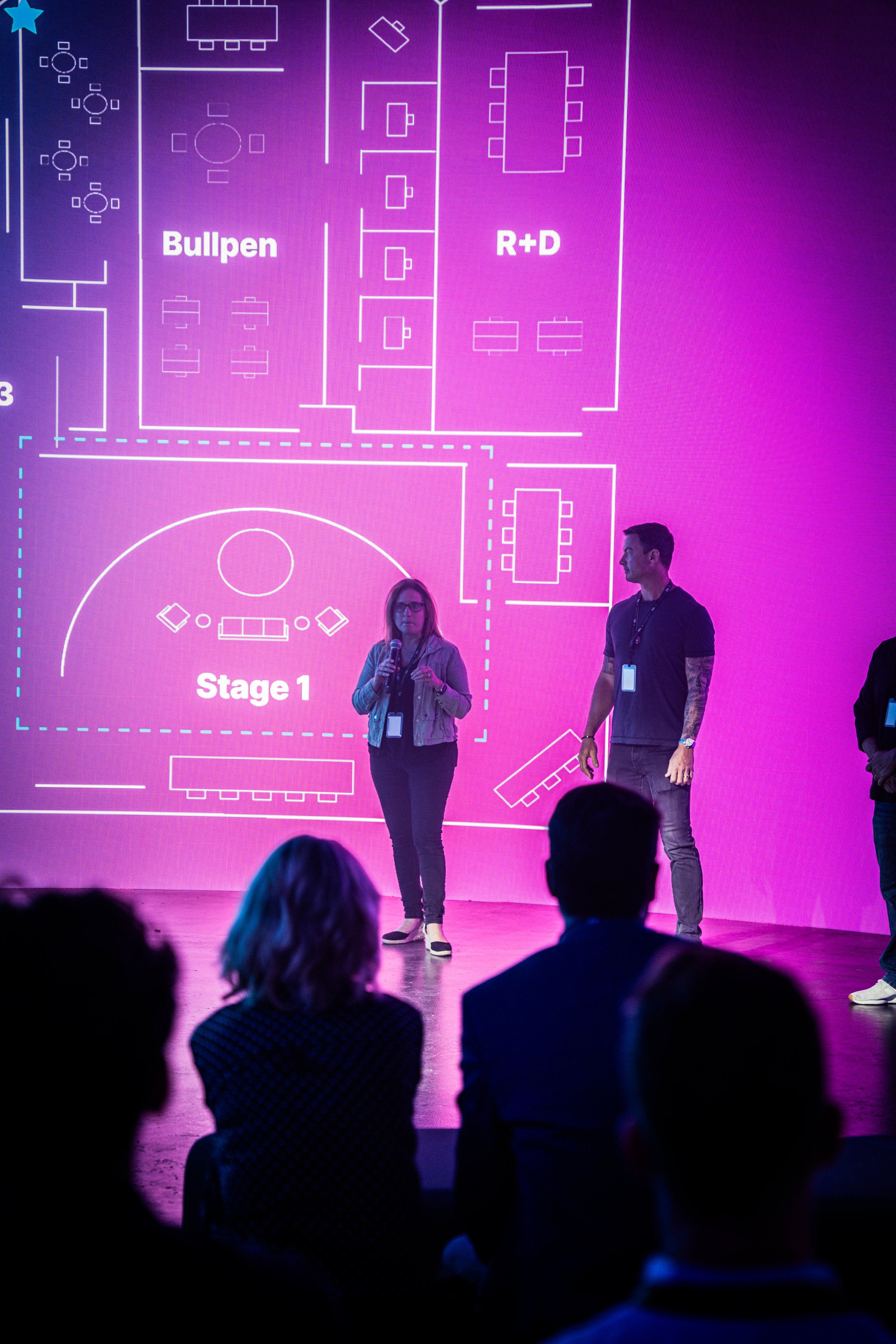
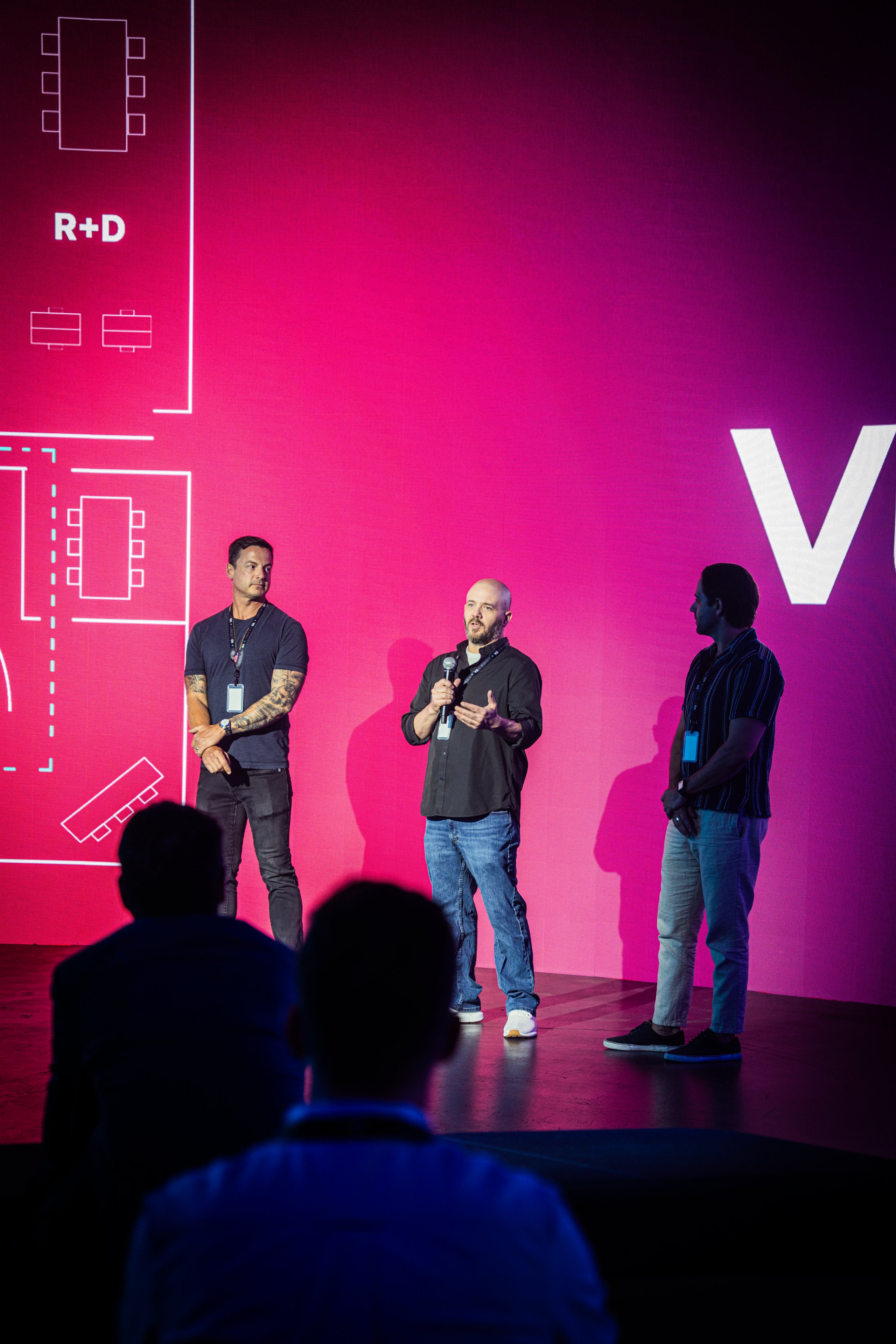
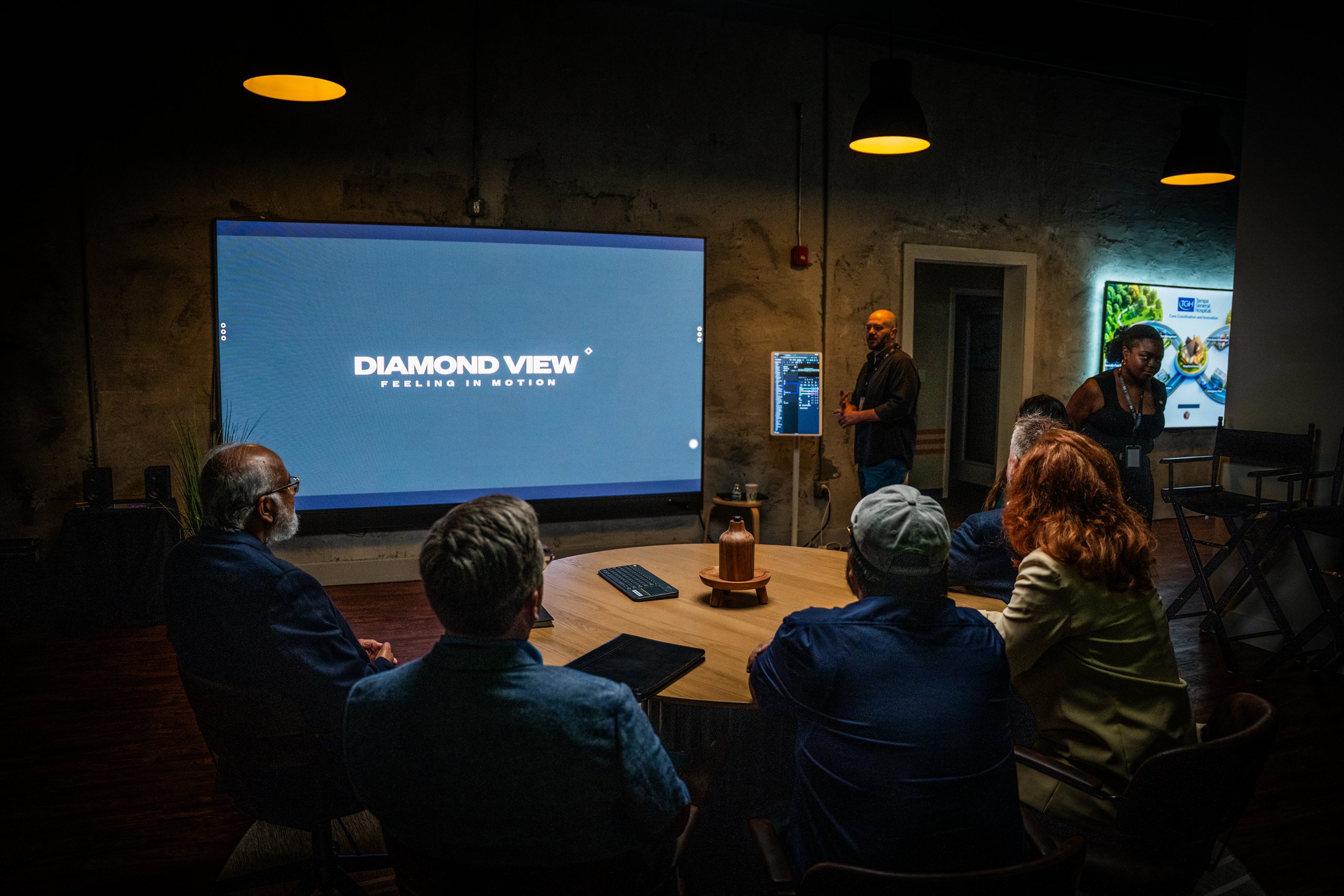
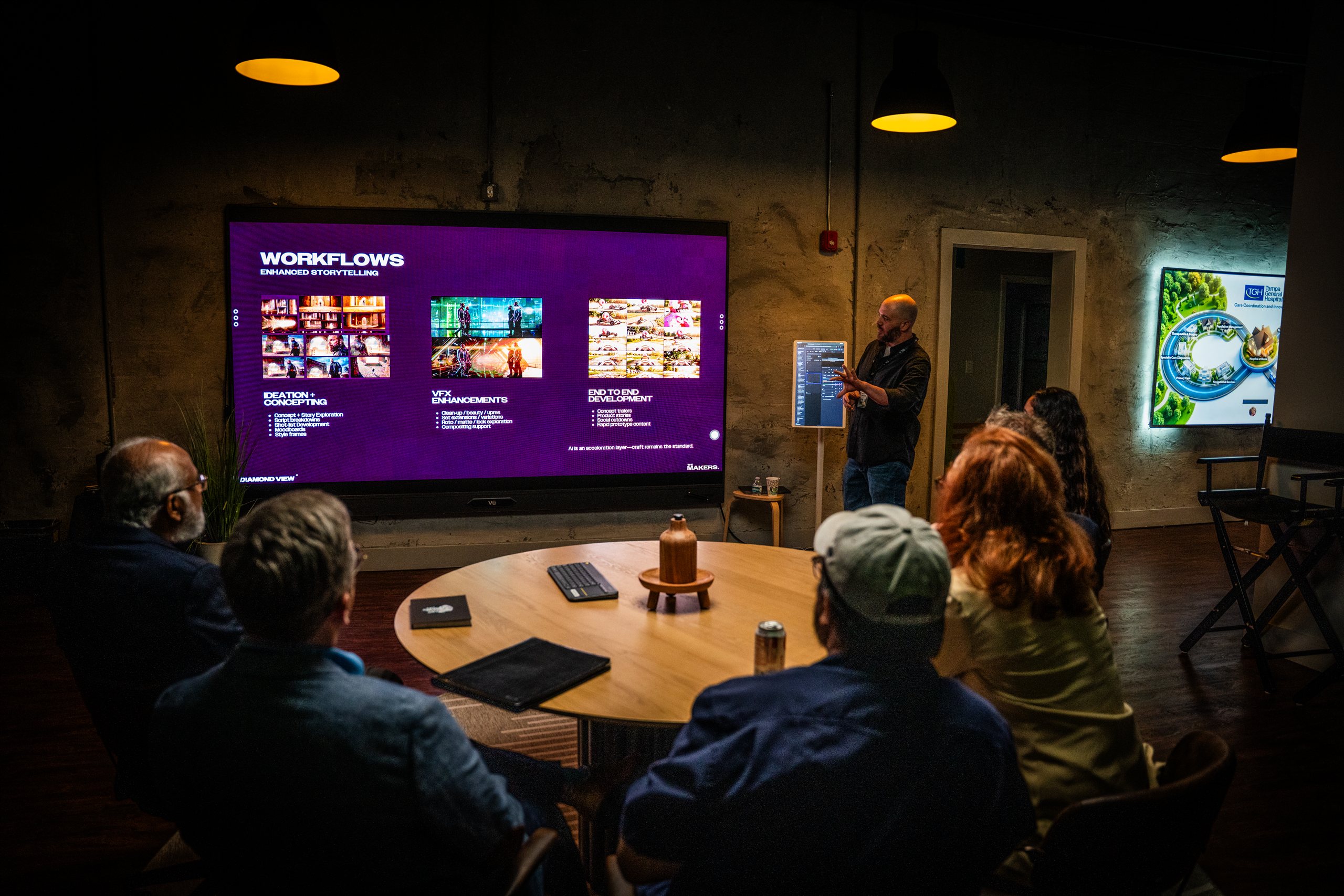
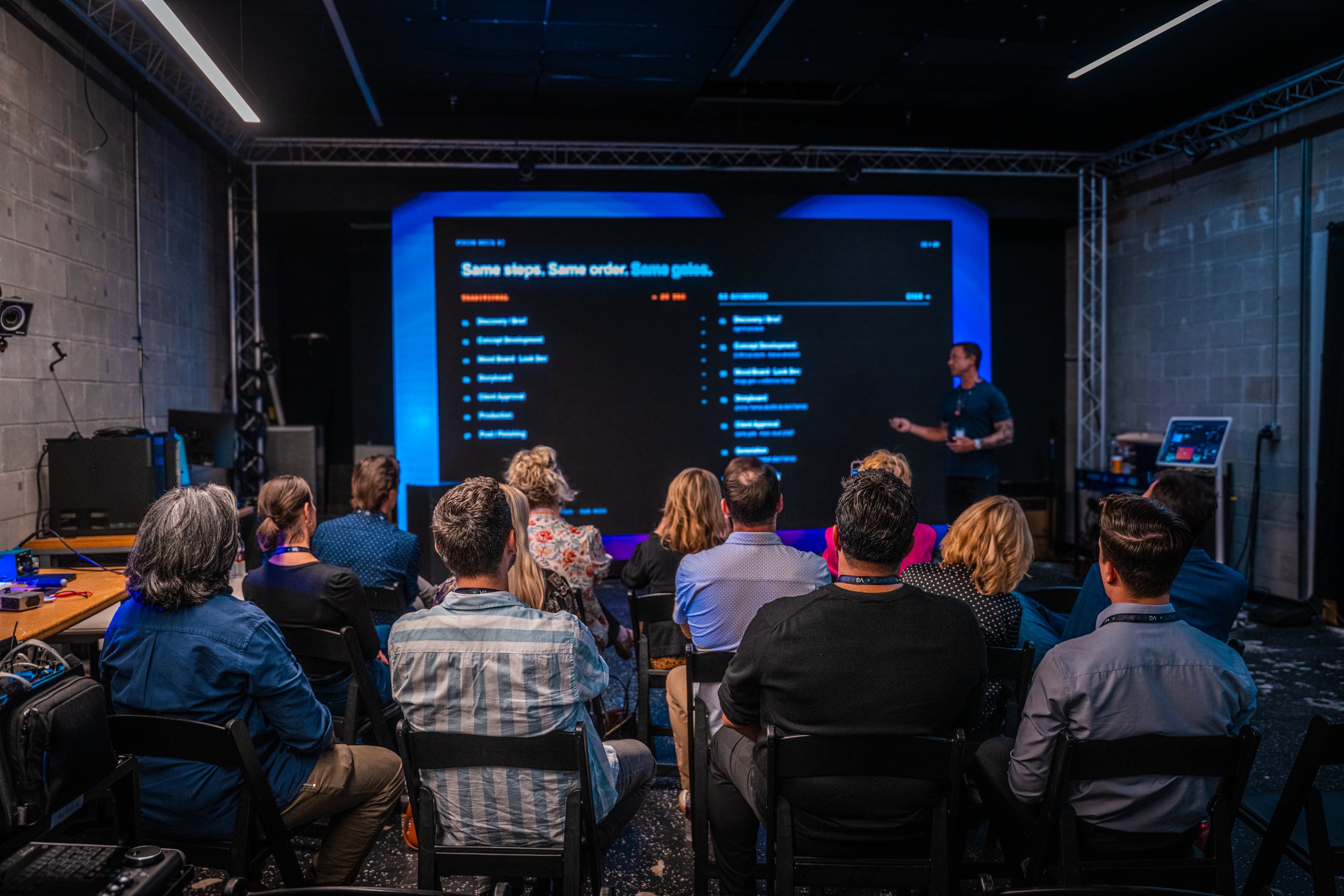
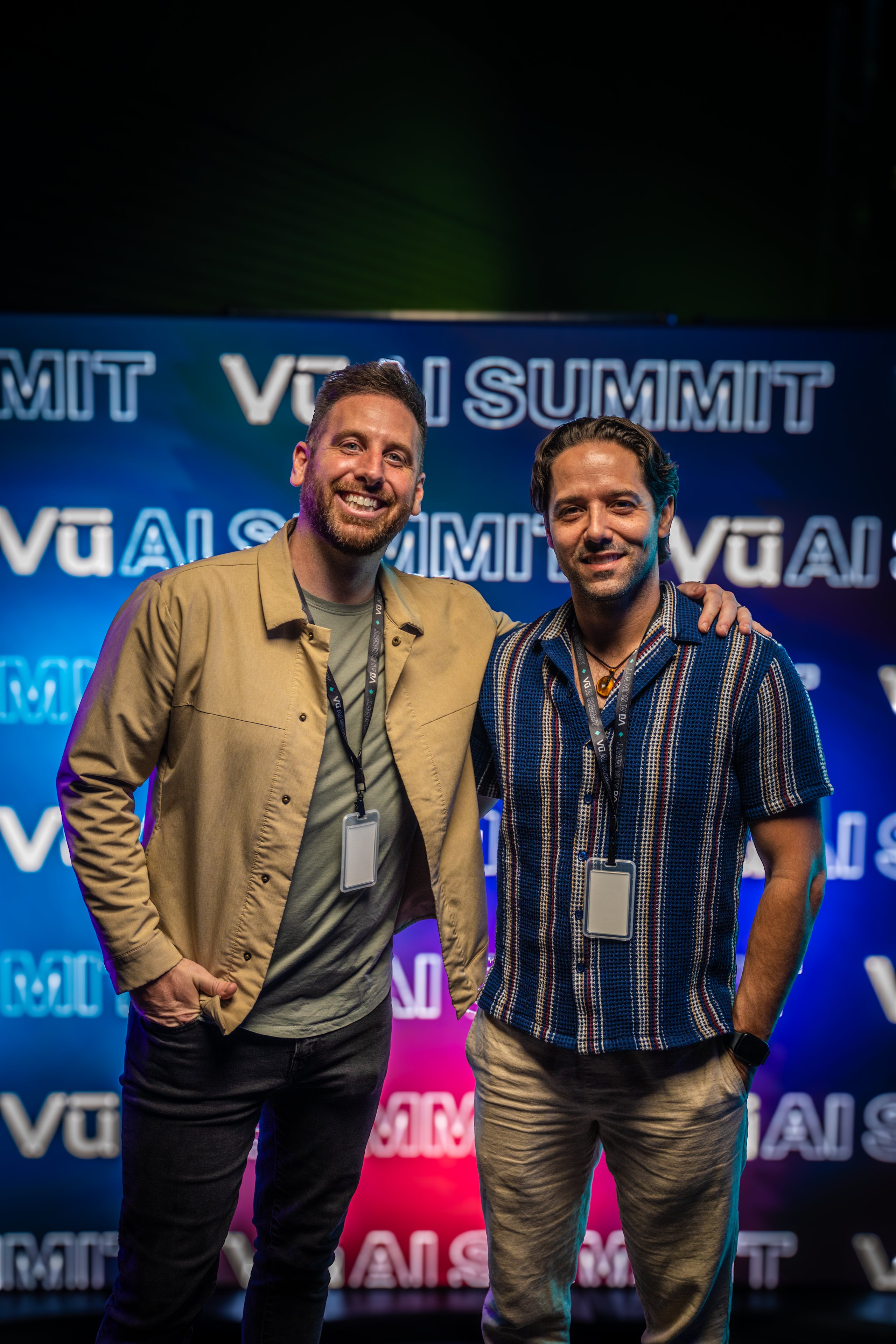
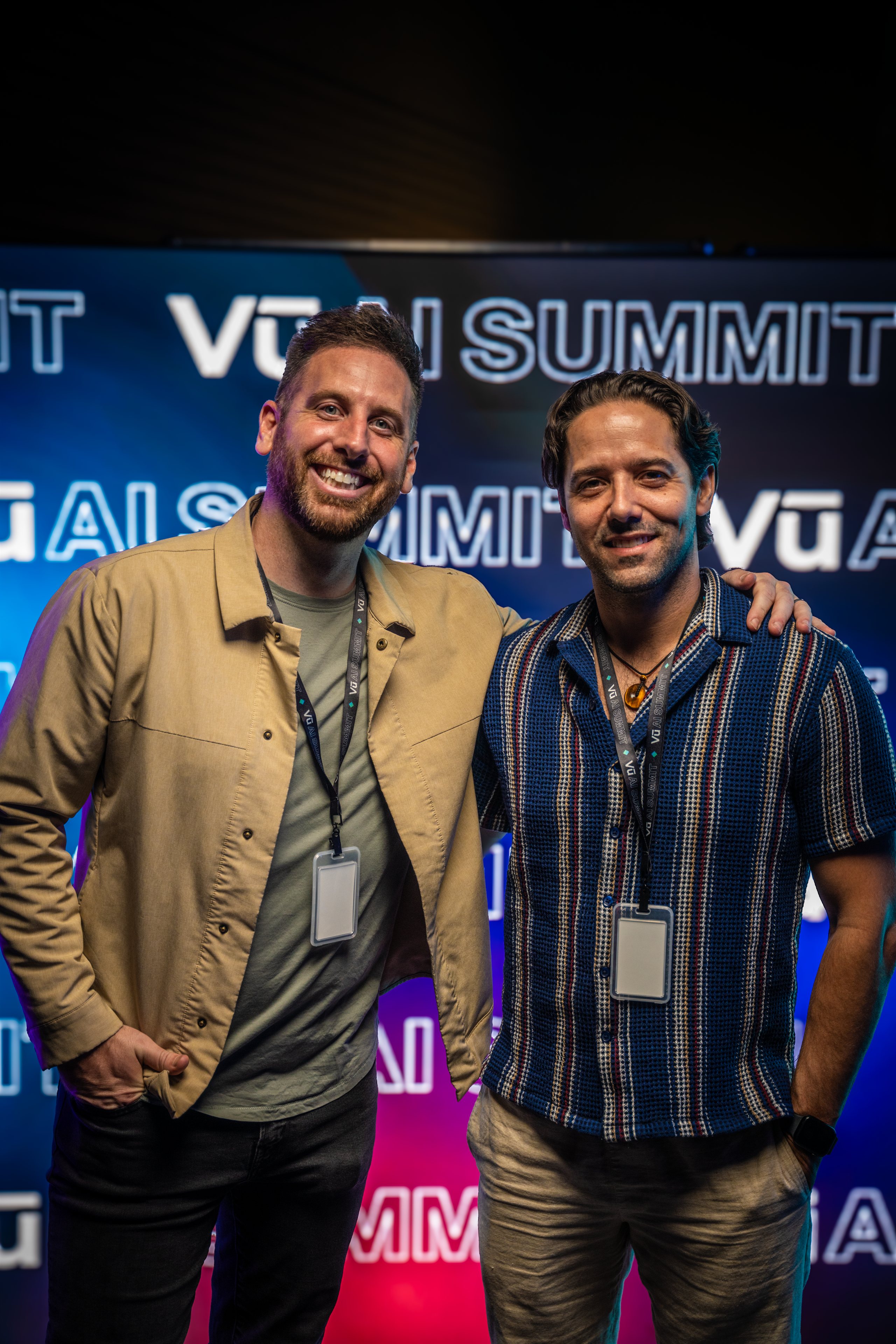
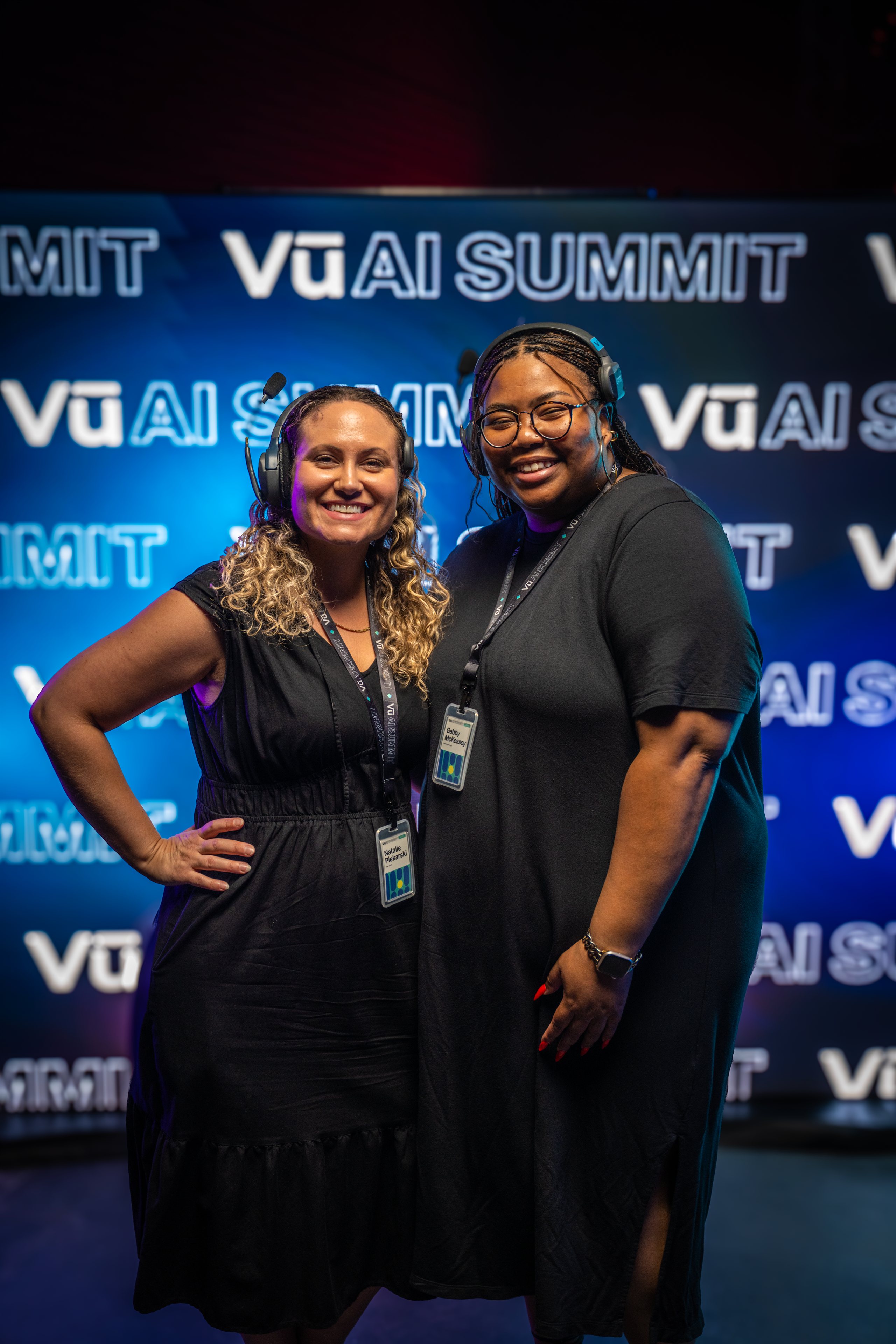
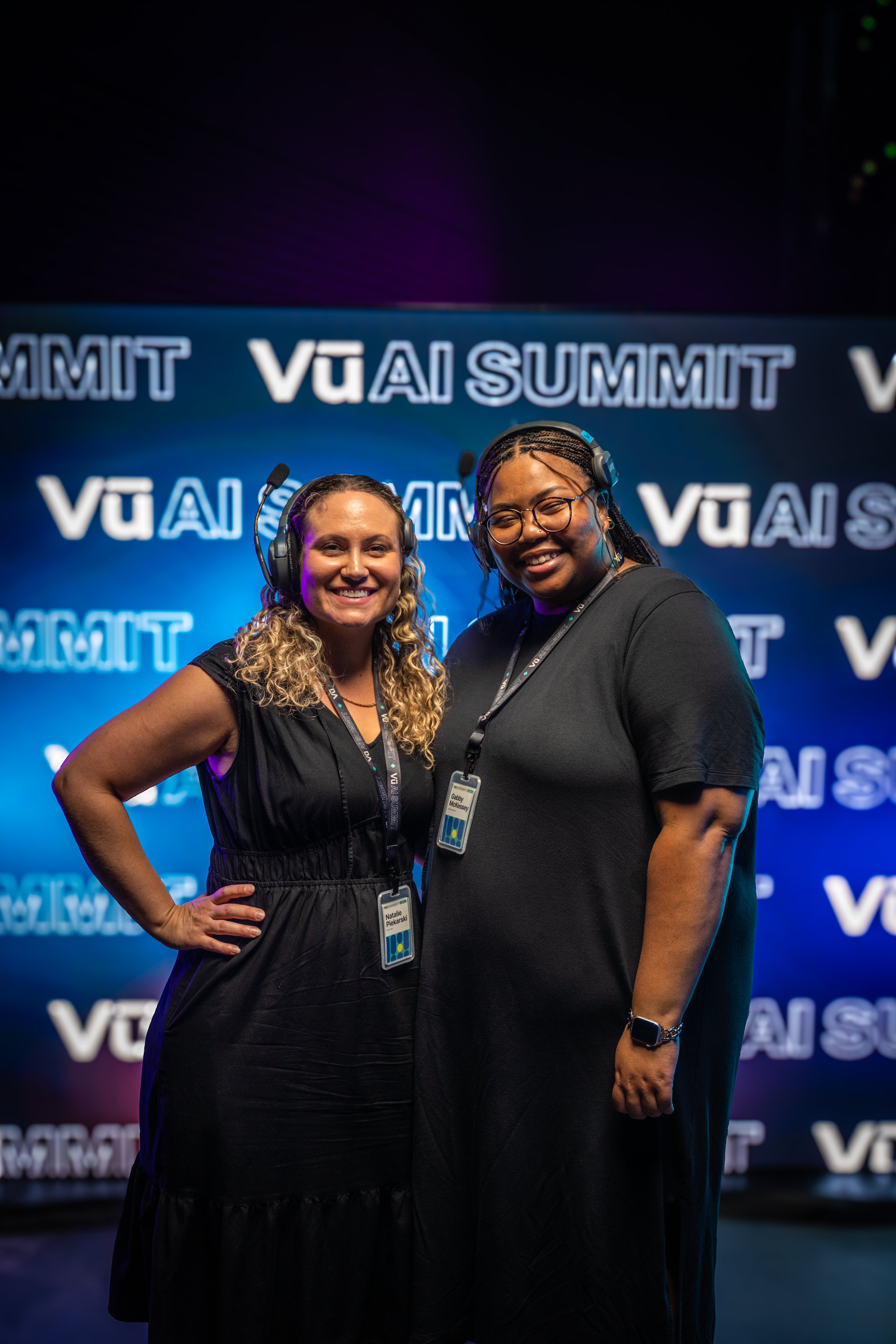
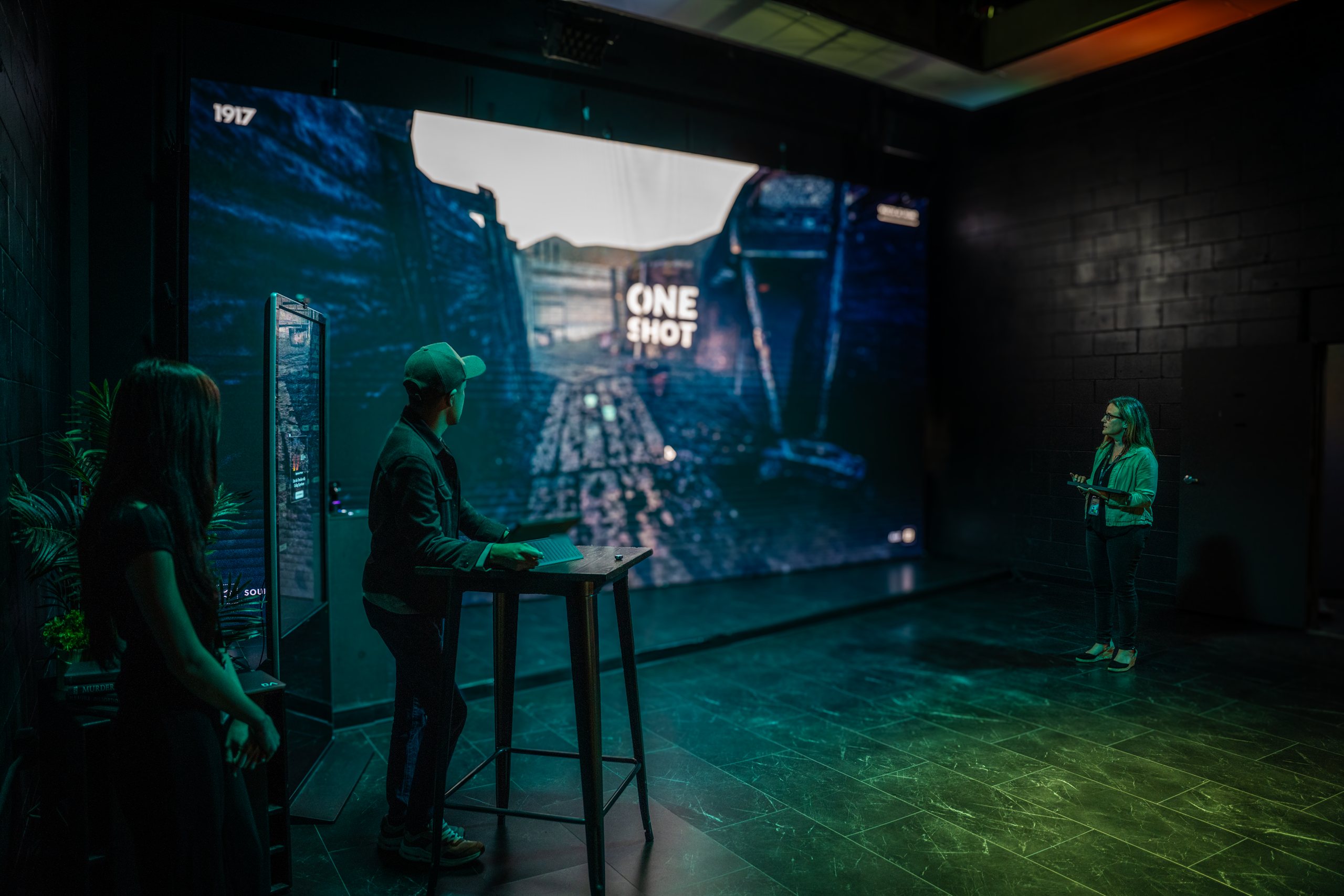
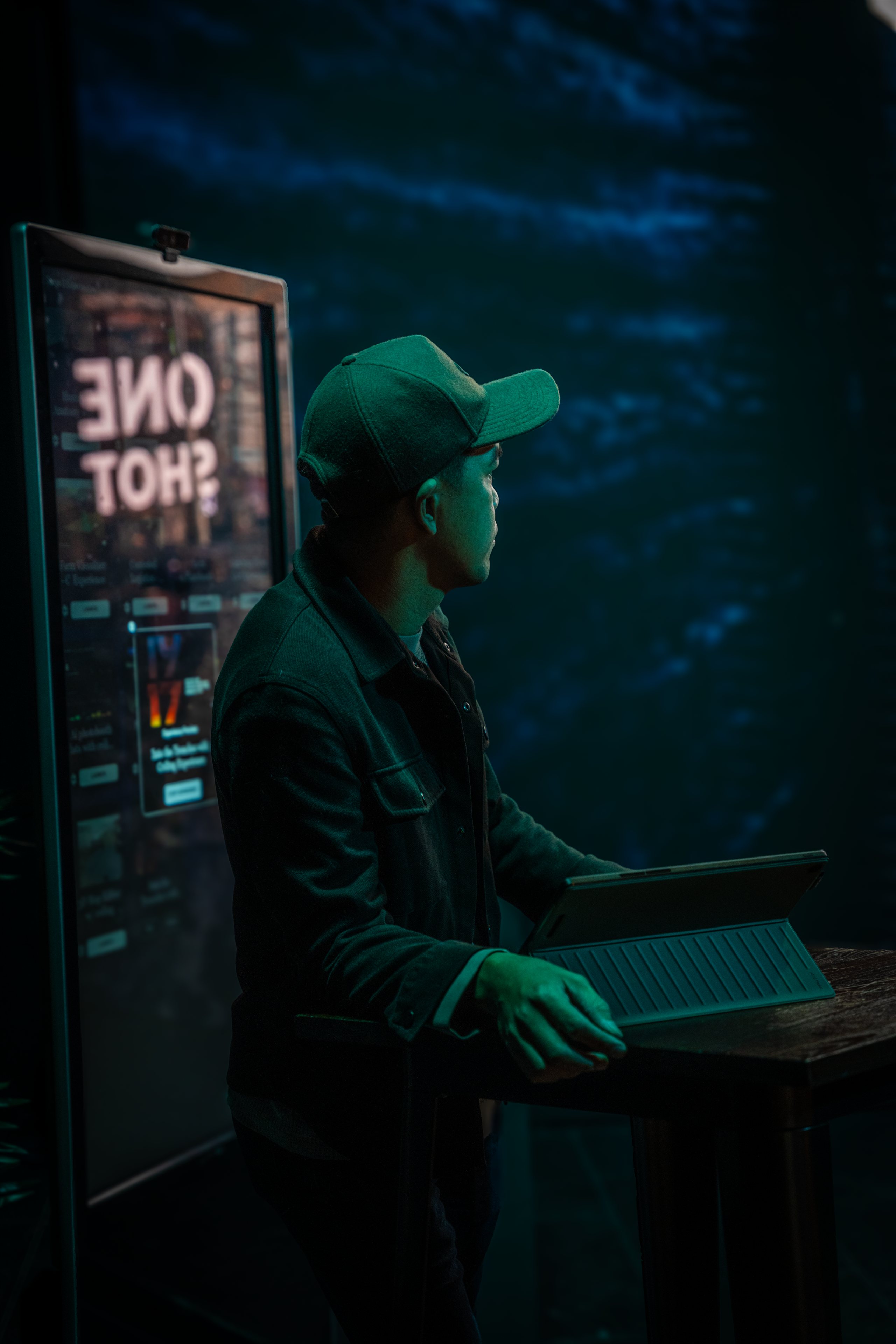
51 moments from across the four sessions — production professionals, content creators, and technology leaders at the Vū AI Summit 2026, captured live.


A live view of how concepts linked to each other across the four sessions. 90 of the most-connected nodes from the 3,406-node graph the day produced — themes, opportunities, challenges, and the insights that bridge them.
Four sessions. Six thousand insights. One throughline: AI is the new camera, the new preproduction layer, the new audience-feedback loop. None of it replaces the craft. All of it expands who can practice it.